
Start with a simple plan
Before buying a single bag of mulch, walk the perimeter of your yard and take notes. Write down which areas get full sun, which stay shaded, and where water pools after rain. These three factors determine what will grow without constant intervention.
A rough sketch on paper is enough. Mark existing trees, walkways, utility boxes, and the house foundation. Then decide which zones you are addressing first. Trying to tackle the entire yard at once is how projects stall. Pick one visible area, complete it, then move on.
If the overall budget for your yard work feels uncertain, it helps to apply the same prioritization logic you would use in household finances. The guide to family budgeting from scratch covers that kind of triage thinking in a household context.
Hardiness zone
A map-based rating that tells you which plants can survive winter temperatures in your specific region. The USDA publishes a plant hardiness zone map for the United States.
Sheet mulching
A method of smothering existing grass or weeds by layering cardboard directly on the ground and covering it with several inches of mulch. The cardboard breaks down over months, adding organic matter to the soil.
Native plant
A plant species that evolved naturally in a specific region without human introduction. Native plants are generally better adapted to local climate, soil, and wildlife than imported ornamentals.
Hydrozoning
Grouping plants with similar water requirements in the same area of the yard so that irrigation and hand-watering can be applied efficiently without over- or under-watering any plant.
Cooperative extension service
A network of university-based programs across the United States that provides free, research-backed gardening and agricultural advice specific to each state and region.
Low-cost materials that do most of the work
Mulch is the single most useful material for a new DIY landscaper. A 2- to 3-inch layer of wood chip or shredded bark mulch suppresses weed germination, slows moisture evaporation from soil, and moderates soil temperature. Bags from a home center are convenient; bulk cubic-yard deliveries are cheaper per square foot once you exceed roughly 10 to 12 bags worth of coverage.
Compost improves compacted or sandy soil without adding cost if you start a simple pile at the back of the property. If you need it sooner, bagged compost is widely available. Work it into the top 4 to 6 inches of soil before planting.
Landscape fabric is often recommended for weed control but has a real drawback: over time it degrades, becomes exposed, and can impede water penetration. Cardboard sheet mulching under wood chips is a cheaper alternative that breaks down and feeds soil biology rather than degrading into fragments.
Choosing plants on a tight budget
Native plants are the most practical choice for most homeowners working on a budget. They are adapted to regional rainfall and soil, which reduces supplemental watering once they are established. State cooperative extension services publish free plant lists specific to your region and hardiness zone; these lists are a reliable starting point that does not require paying for a consultation.
Buy small. A 4-inch pot costs a fraction of a 3-gallon container of the same species. Given one full growing season, most perennials and shrubs fill in to a comparable size. Patience is the cheapest plant budget strategy available.
Dividing perennials from neighbors, family members, or community plant swaps is another way to stock a bed at little or no cost. Many fast-spreading perennials such as coneflowers, black-eyed Susans, and ornamental grasses divide cleanly in spring or fall.
Avoid plants labeled as fast-growing or aggressive spreaders unless you are filling a large contained area. Invasive plants create removal costs later that far exceed any initial savings.
Edging: the detail that ties everything together
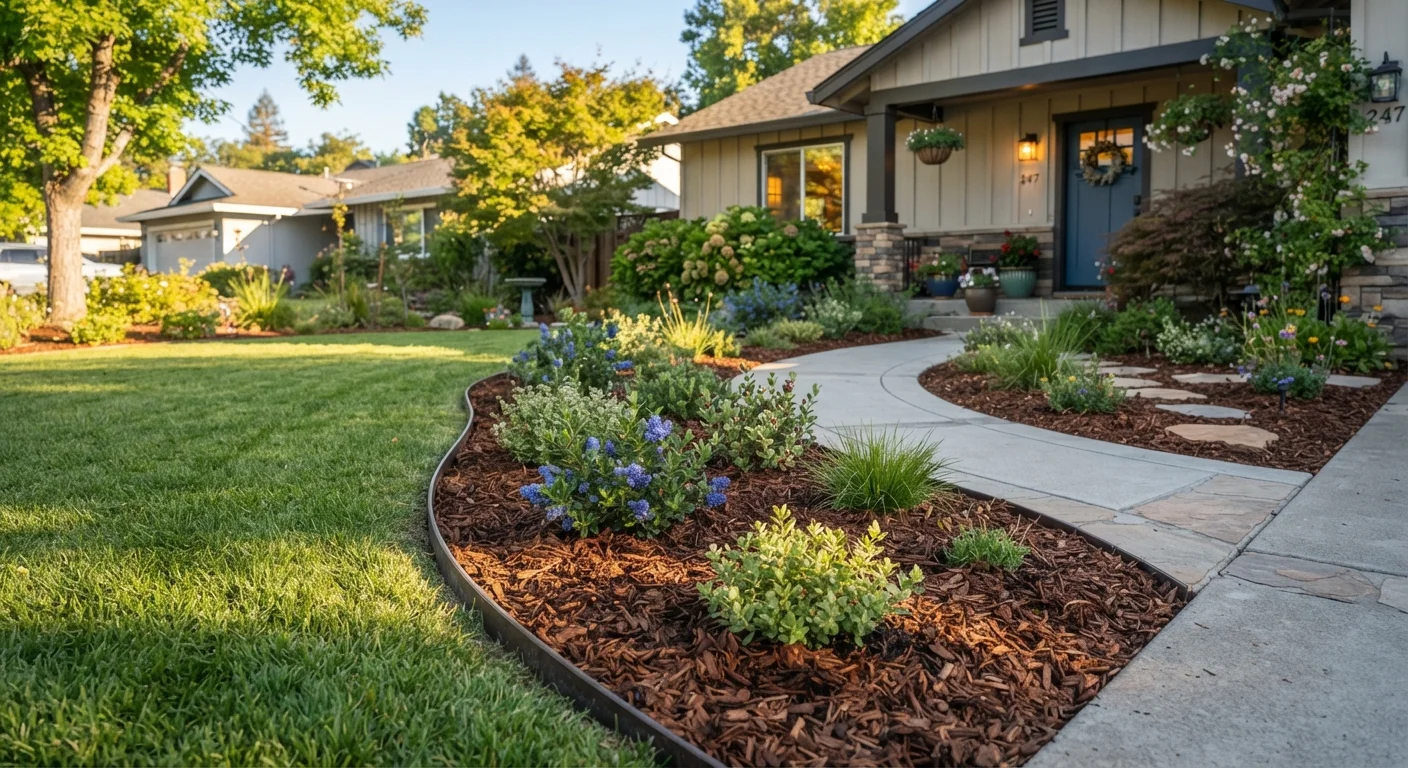
Clean edges between lawn and planting beds have a disproportionate visual effect. A bed with sparse planting but a crisp edge reads as intentional. The same plants with ragged grass bleeding into the mulch look neglected.
A flat spade or half-moon edger is enough for most yards. Cut along a garden hose laid in your desired curve to get a smooth line without measuring. The cut trench itself acts as a barrier; you do not necessarily need installed edging material.
If you want a more permanent solution, steel or aluminum edging holds its shape over years and resists heaving better than plastic. Plastic edging is cheaper upfront but tends to shift, buckle, and become a tripping hazard. Steel edging requires a one-time investment that typically pays for itself in reduced re-edging labor.
The same attention to clean finishing applies to indoor projects. If you have been thinking about refreshing other parts of the house, the room painting guide covers that same principle of preparation doing most of the visible work.
Use a hose to design curved beds
Lay a garden hose on the ground to preview the shape of a new bed before cutting anything. You can adjust the curve by repositioning the hose until the line looks right from the street. Once satisfied, mark the line with spray paint or flour, then cut. This approach costs nothing and prevents you from cutting a shape you later regret.
Keeping maintenance costs low over time
The cheapest landscape is one that needs little ongoing intervention. Group plants with similar water needs together so you are not hand-watering one thirsty specimen surrounded by drought-tolerant neighbors. This concept, called hydrozoning, reduces both time and water costs.
Refresh mulch once a year, typically in late spring. A single annual top-up of about 1 inch keeps weed pressure low and maintains the moisture benefits without smothering plant crowns.
Pull weeds when they are small. A few minutes of weekly attention prevents the hour of work required once weeds are established and seeding. Kneeling pads and a quality hand weeder lower the physical barrier to that weekly habit.
For anyone who wants to extend the same budget discipline indoors, small decor changes that improve a room applies similar low-cost principles to interior spaces.