
What each product actually is
These three terms get used interchangeably at hardware stores, but they describe different products with different physical properties.
Caulk is a flexible, paste-like compound that cures into a rubbery or semi-rigid bead. Most caulks sold for home use are either silicone-based, acrylic-latex, or a hybrid of both. Silicone caulk resists moisture and temperature swings well; acrylic-latex versions are easier to apply, paintable, and clean up with water. Both stay slightly flexible after curing, which is what makes them suitable for joints that move.
Grout is a cement-based (or epoxy-based) material mixed to a thick paste and packed into the narrow gaps between tiles. It cures rigid. Unsanded grout is used for joints under about 1/8 inch wide; sanded grout handles wider joints without shrinking. Epoxy grout skips the cement entirely, cures even harder, and resists staining without a separate sealer.
Sealant is a broad term. In common use around tile and masonry, it usually means a topcoat product applied over cured grout to block moisture penetration. Silicone caulk is technically a sealant too, so the word overlaps depending on context. When a tile installer says to seal the grout, they mean apply a penetrating liquid sealer, not caulk.
Where each one belongs
| Criterion | Caulk | Grout |
|---|---|---|
| Flexibility after cure | Flexible or semi-rigid | Rigid |
| Best joint type | Change-of-plane or movement joints | Tile-to-tile gaps on stable surfaces |
| Moisture resistance | High (especially silicone) | Low to moderate without sealer |
| Needs topcoat sealer | No | Yes (cement-based types) |
| Paintable | Acrylic-latex types only | No |
| Typical lifespan in wet areas | 5 to 10 years (silicone) | 10 or more years if sealed |
| Removal difficulty | Moderate (razor or caulk tool) | High (grout saw or oscillating tool) |
The location and type of joint determine the correct product, not personal preference or what is left over from another project.
Grout belongs between tiles on floors, walls, shower walls, and countertops as long as those surfaces are flat and stable. The joint edges are uniform, the substrate does not flex, and the rigid cure is an asset.
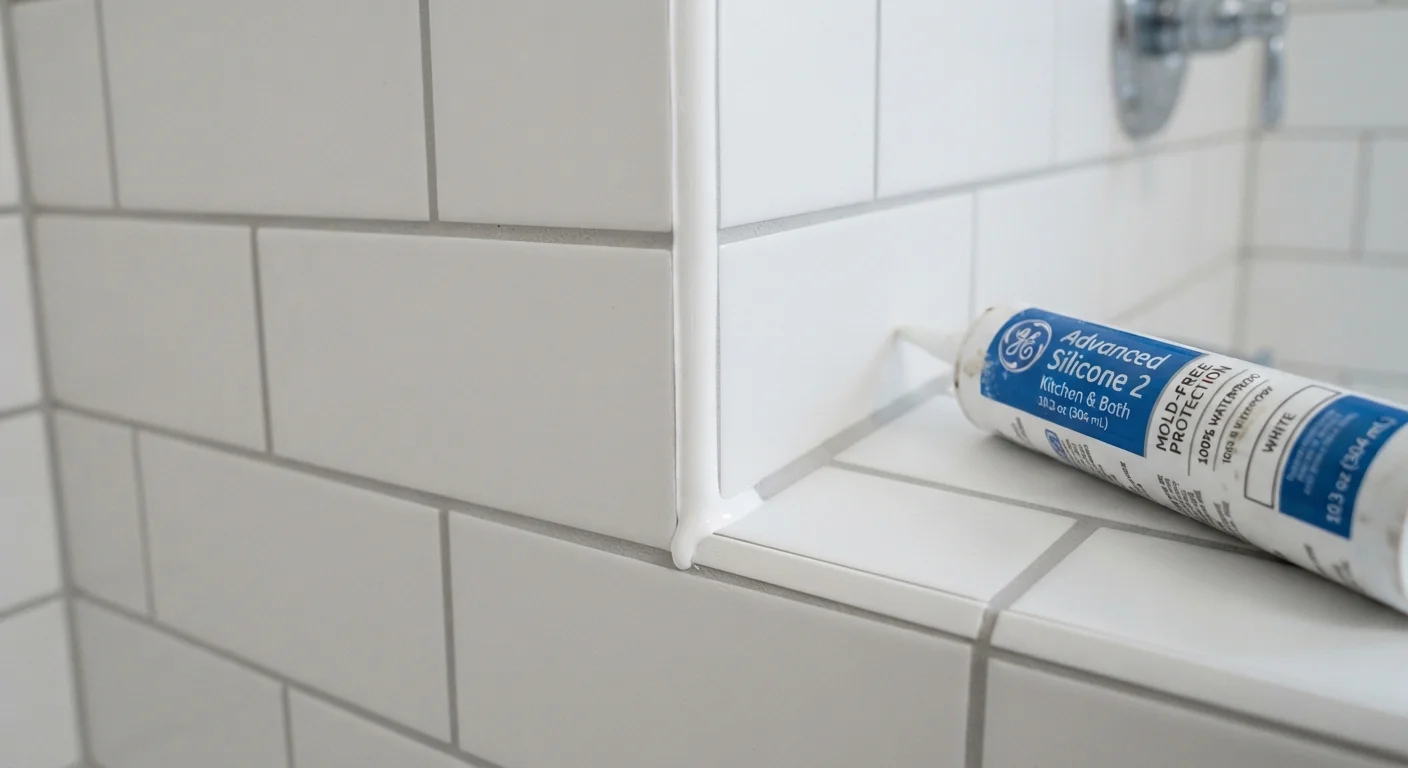
Caulk belongs at any change of plane or material: where tile meets a tub deck, where a wall tile column meets the floor tile, along the inside corners of a tiled shower, around plumbing fixtures, and around window and door frames. These are all locations where two surfaces may shift relative to each other.
A penetrating sealer belongs on top of porous, cement-based grout after it has fully cured (typically 48 to 72 hours after installation). Epoxy grout does not need a sealer because it is non-porous by nature. Silicone caulk also does not need sealing.
The most common mistakes homeowners make
Grouting a tub-to-tile joint is the most frequent error. Because the joint looks like a tile gap, homeowners apply grout there. Grout cracks within one to two seasons because the tub deflects under weight and the joint flexes. Water gets behind the wall, and mold follows.
The second common mistake is using caulk to fill tile-to-tile joints. Caulk in a floor tile joint compresses underfoot and eventually looks sunken and dirty. It also lacks the hardness to prevent tile edges from chipping against each other.
Skipping grout sealer on a new tile installation is another money-losing shortcut. Unsealed cement grout absorbs cooking oil, soap residue, and dirt within weeks. Re-grouting a floor or shower is a multi-hour job; applying sealer takes about 20 minutes and extends the grout's clean appearance considerably.
One practical note: local building codes in some jurisdictions specify minimum requirements for waterproofing in wet areas, which can affect which products are acceptable. Check with your local building department before starting any bathroom tile work that involves opening walls.
How to choose the right product for your project
Ask two questions before buying anything. First, will this joint experience movement? If yes, use caulk. If no, grout is likely correct. Second, is this an existing tiled surface that just needs protection? If yes, a penetrating grout sealer is what you need, not caulk and not fresh grout.
For color matching, caulk and grout are sold in overlapping color ranges. Major tile supply distributors stock caulk that is color-matched to their grout lines specifically so corners and field joints look consistent. Look for this option if you want a seamless result.
For wet areas like showers and tub surrounds, 100% silicone caulk holds up better than acrylic-latex over time, but it requires a clean, dry surface to bond correctly and cannot be painted. Acrylic-latex caulk is easier to work with and is the right choice for painted trim, window frames, and baseboards.
This article is for general informational purposes only. Always verify local building codes and permit requirements with your local building department before beginning any home improvement work.