
How the costs actually break down
Material costs for laminate typically run between $1 and $5 per square foot, depending on thickness and wear layer rating. Hardwood generally falls between $3 and $10 per square foot for the material alone, with engineered hardwood sitting closer to the lower end of that range and solid hardwood at the top.
Professional installation adds $2 to $5 per square foot for either product, but laminate's click-lock systems make DIY installation realistic for homeowners with basic tools and a weekend. Hardwood installation, especially nail-down or glue-down methods, involves more steps and is less forgiving of errors. Mistakes in hardwood installation can mean costly material waste.
Factor in underlayment (usually included with laminate but separate for hardwood), transition strips, and any subfloor leveling work. A 200-square-foot room might cost $400 to $800 total for a laminate DIY job versus $1,200 to $2,500 professionally installed hardwood. Those numbers vary widely by region and project complexity.
| Laminate | Hardwood | |
|---|---|---|
| Material cost per sq ft | $1 to $5 | $3 to $10 |
| DIY friendliness | High, click-lock system | Moderate to low, tools and skill needed |
| Scratch resistance | High, aluminum oxide wear layer | Moderate, varies by species |
| Moisture tolerance | Moderate, not waterproof | Low, warps with humidity |
| Refinishable | No | Yes, multiple times |
| Typical lifespan | 15 to 25 years | 25 to 100+ years with refinishing |
| Resale appeal | Moderate | Strong in most markets |
Durability and daily wear
Laminate's top wear layer is aluminum oxide, which resists scratches from furniture, pet nails, and dropped objects better than most hardwood species. Hardwood, particularly softer species like pine or cherry, dents and scratches more visibly under heavy use. Harder species such as white oak or hickory hold up better, but still trail laminate in scratch resistance.
Moisture is where the gap widens. Solid hardwood swells, warps, and gaps with humidity changes. Even engineered hardwood has limits. Laminate handles spills and temporary humidity better, though it is not waterproof: standing water can swell the core over time. Waterproof luxury vinyl plank is the better call for truly wet areas, but for kitchens and basements with moderate moisture, laminate outperforms solid hardwood.
Hardwood's real durability advantage is longevity measured in decades. A properly maintained hardwood floor can be sanded and refinished five or more times over its life, meaning a 100-year-old hardwood floor can look nearly new. Laminate, once worn or damaged, must be replaced entirely.
Installation: what DIYers should know
Laminate floating floors click together over an underlayment without adhesive or nails. Most homeowners with basic measuring and cutting skills can complete a room in a day. The main tools needed are a miter saw or jigsaw, a tapping block, and a pull bar. Errors are easier to correct mid-install because planks can be unclicked and repositioned.
Hardwood installation has more variables. Nail-down installation requires a flooring nailer (rentable) and careful attention to grain direction, expansion gaps, and acclimation time. Hardwood must acclimate in the room for at least 72 hours before installation to adjust to the home's humidity. Skipping acclimation causes buckling or gapping later. Glue-down methods add adhesive cost and require precise working time.
Local building codes rarely require permits for flooring replacement, but check with your municipality if the project involves structural subfloor repairs. If removing old flooring reveals asbestos-containing materials in homes built before 1980, stop work and consult a licensed abatement professional before proceeding.
Resale value and buyer perception
Real estate professionals generally note that hardwood flooring is a positive factor for buyers in many markets, though the actual impact on sale price varies by neighborhood, home price range, and buyer preferences. In entry-level housing markets, the premium buyers pay for hardwood over quality laminate may be modest. In higher-end markets, buyers may expect hardwood and discount homes with laminate in primary living areas.
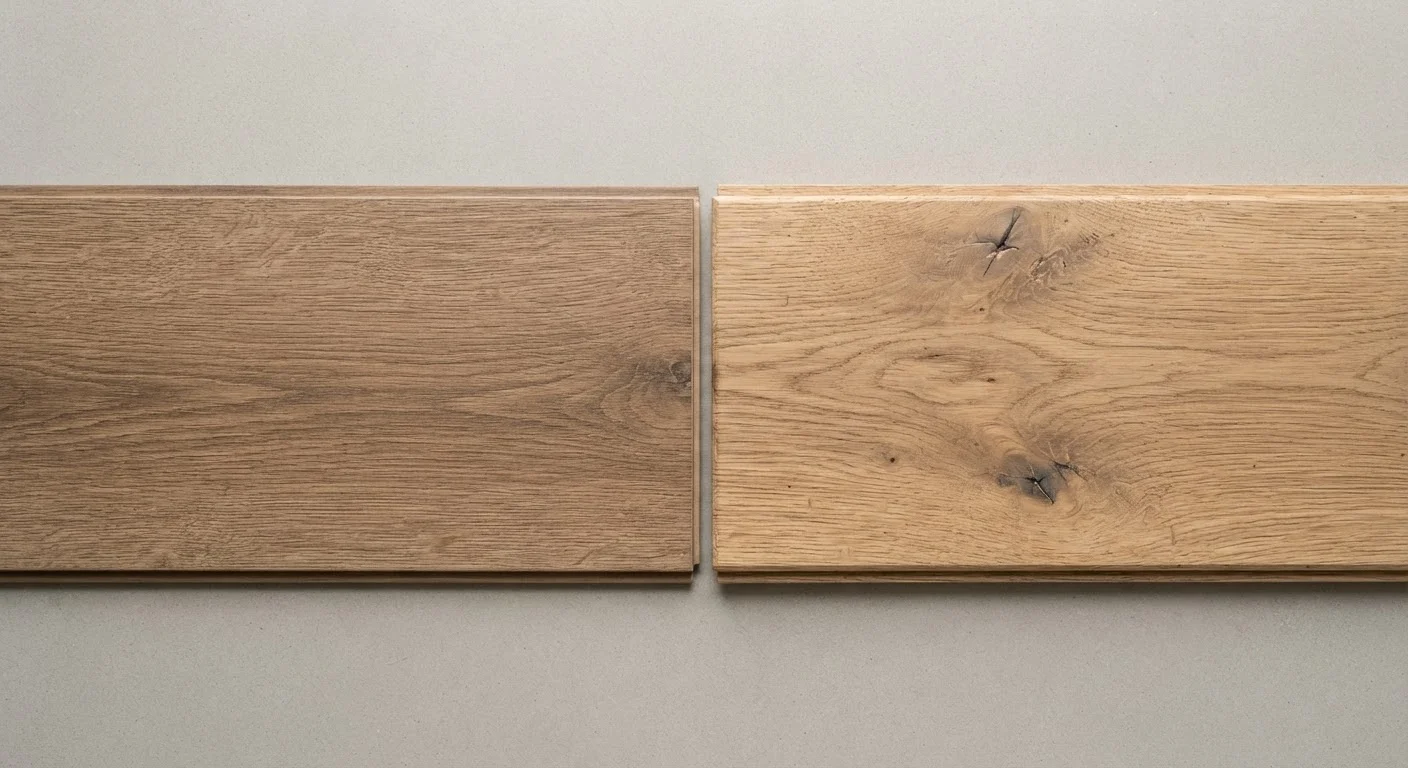
Laminate has improved substantially in appearance. Thick, high-definition laminate can convincingly replicate wood grain, and most buyers will not notice the difference on a casual walkthrough. However, during a home inspection or if a buyer looks closely at edges and transitions, the material distinction becomes clear.
If resale is a primary motivator, installing hardwood in main living areas while using laminate in bedrooms or less-visible spaces is a common middle-ground approach that manages costs without sacrificing perceived value at first impression.