
Why small décor changes work
A room doesn't feel small because of its actual square footage alone. It feels small because of how light moves through it, where the eye lands, and how much visual noise competes for attention. Small décor changes work by managing those three factors without touching a wall or spending on renovation. The changes below are ordered roughly by cost, starting with the least expensive, and all are reversible. They apply equally to living rooms, bedrooms, and small home offices.
Six changes that open up a room
Hang mirrors opposite natural light sources
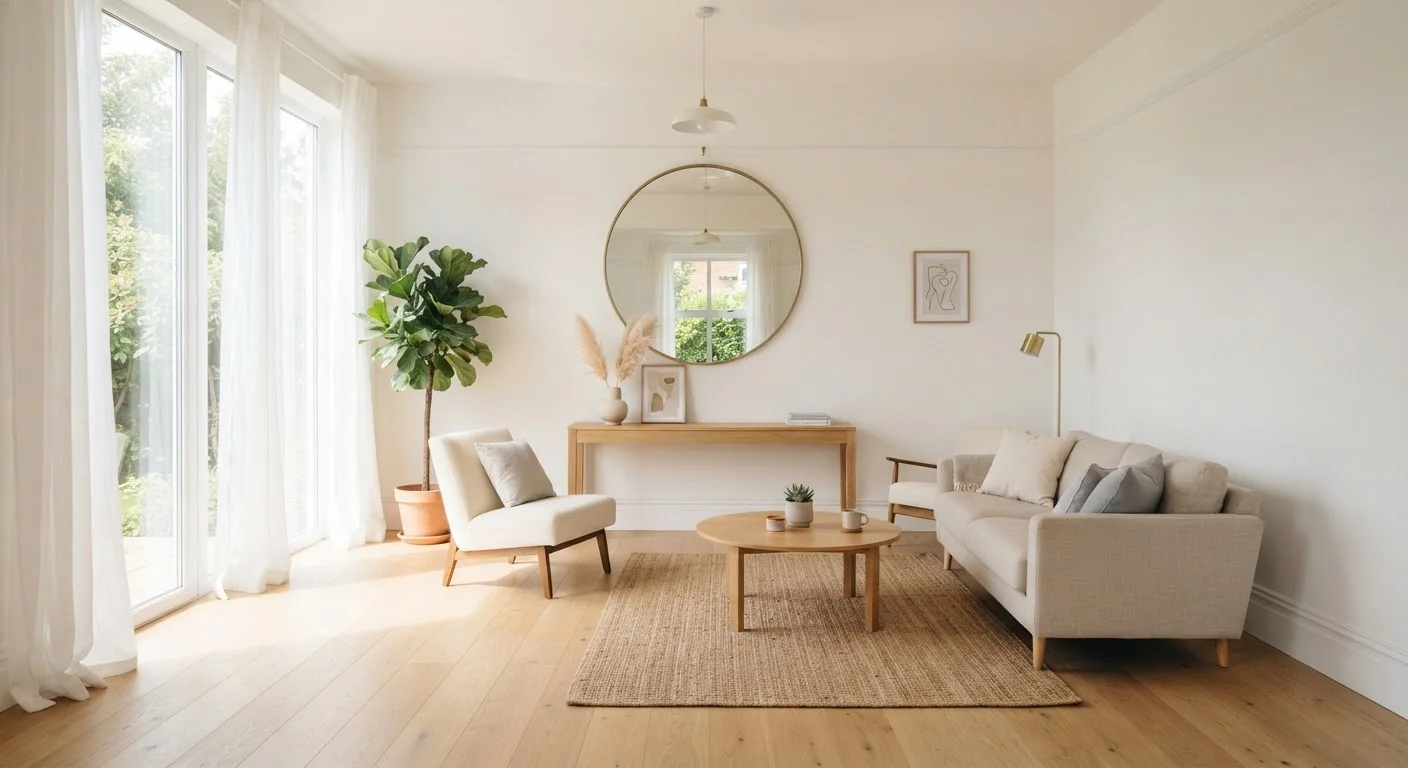
A mirror placed directly across from a window bounces daylight deeper into the room and creates the impression of a second opening. The effect is strongest with flat, frameless mirrors or those with thin metallic frames that don't draw attention to themselves. Aim for a mirror that covers at least half the wall width to have a meaningful impact. Leaning a large mirror against a wall is a no-drill option that works in rentals.
A mirror opposite a window can visually double the daylight in a small room.
Mount curtain rods close to the ceiling
Most curtain rods are installed just above the window frame. Moving the rod to within a few inches of the ceiling and letting curtains fall to the floor draws the eye vertically and makes the walls read as taller than they are. The curtains themselves don't need to be expensive; solid, light-colored panels in linen or cotton work well and cost less than heavy drape fabric. This change costs a few dollars in hardware and an hour of time.
Ceiling-height curtain rods cost a few dollars and make walls feel significantly taller.
Pull furniture away from the walls
The instinct in a small room is to push all furniture to the perimeter to free up the center. In practice, leaving two to four inches of space between furniture backs and walls creates a sense of breathing room. Floating a sofa slightly into a room also allows for a narrow console table or bookshelf behind it, adding storage without consuming visible floor area. The open gap, even a small one, breaks the impression of a room stuffed with objects.
Even two inches of gap between a sofa and the wall disrupts the 'stuffed room' effect.
Use a single consistent color on walls and trim
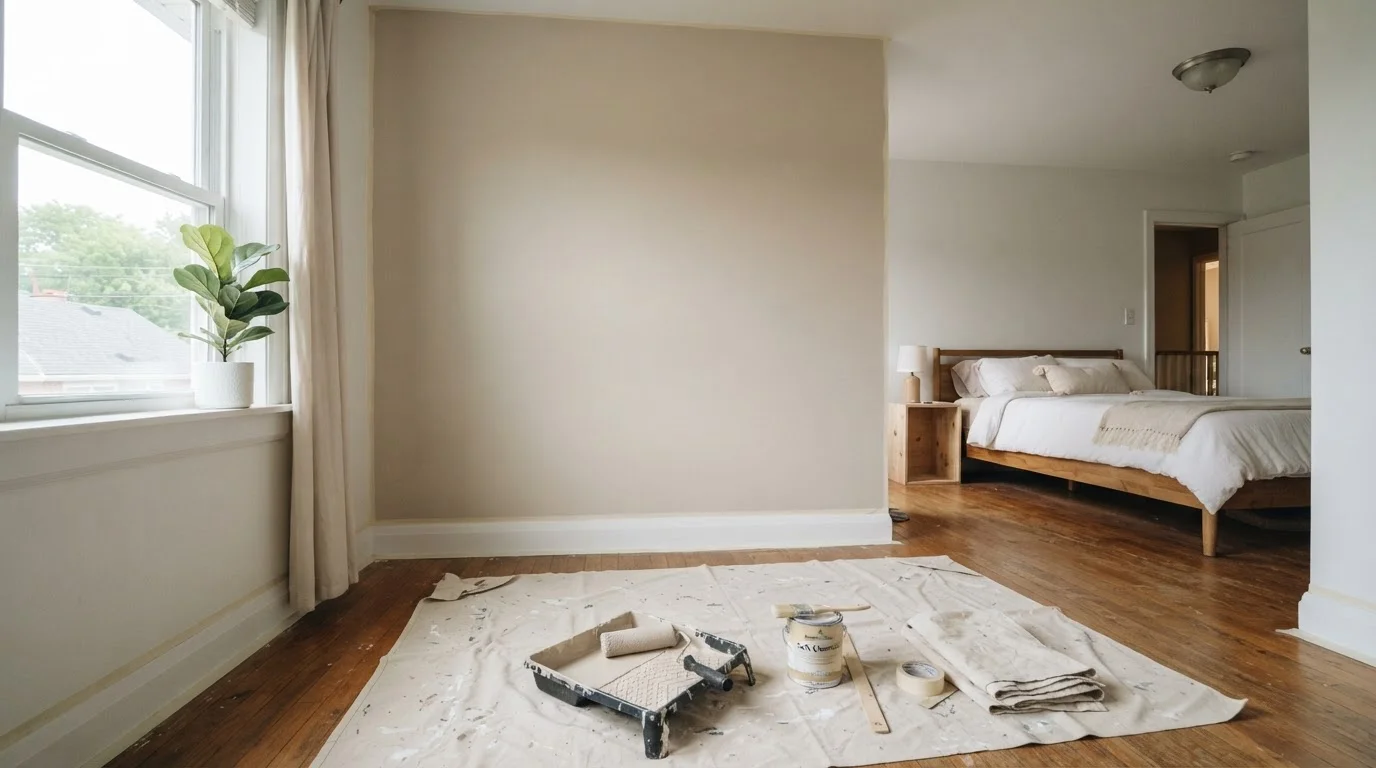
Painting walls and trim the same color, or very close shades of the same hue, removes the horizontal line where the two meet. That line is what the eye reads as the boundary of the room. Without it, the space reads as continuous. Lighter shades reflect more light, but the consistency matters more than going as pale as possible. This pairs well with a fresh paint job; see the step-by-step room painting guide for practical technique and material costs.
Matching wall and trim color removes visual boundaries that make a room feel boxed in.
Move lighting up and use multiple lower-wattage sources
A single overhead fixture creates a pool of light in the center of a room and leaves corners dark. Dark corners visually shrink the room because the eye reads them as the end of the space. Floor lamps and table lamps placed in corners push perceived boundaries outward. Wall sconces do the same job with no floor footprint. Swapping a central bright bulb for several distributed sources does not require rewiring; plug-in sconces and battery-powered options handle most situations without any electrical work.
Lighting corners pushes the perceived edges of a room outward without moving a single wall.
Clear surfaces and go vertical with storage
Horizontal clutter on counters, shelves, and tables fragments the eye and makes rooms feel busy and compressed. Moving stored items off flat surfaces and onto wall-mounted shelves or tall bookcases does two things: it frees the visual field at eye level, and it uses wall height that's often wasted. A room with clear surfaces and a floor-to-ceiling shelf reads as more organized and larger than one with the same volume of objects spread across horizontal surfaces. This costs nothing if you already own the items; it's a matter of rearranging what's there.
Moving clutter from flat surfaces to vertical wall storage immediately opens up visual space.
No renovation required for most of these changes
All six strategies on this list are renter-friendly or require only basic hardware (screws, wall anchors, curtain rods). None involve structural work, permits, or licensed contractors. If you rent, check your lease before drilling; adhesive strips and freestanding options cover most of the same ground without permanent installation.
Putting it together without overspending
These changes compound. A room with ceiling-height curtains, a mirror opposite the window, consistent wall-and-trim color, and clear surfaces will feel noticeably larger than one with only one adjustment in place. Start with the free or near-free options: rearrange furniture, clear surfaces, move existing lamps to corners. Then assess what hardware purchases would add the most impact before spending anything. For more low-cost interior improvements, the room painting walkthrough covers prep and paint selection without professional help. Families working across multiple home projects can also find broader money-saving strategies in the Frugal Family Living hub.