
What bulk buying actually means for your budget
Bulk buying means purchasing larger quantities of a product at a lower cost per unit than you would pay for a standard-sized package. The appeal is straightforward: pay less per ounce, per roll, or per serving over time. For families working through a tight monthly budget, that per-unit gap can translate to real savings across a year.
The catch is that the math only works if you use everything you buy before it expires, degrades, or gets pushed to the back of a shelf. A 72-count bottle of vitamins that expires in eight months costs more than it saves if you typically go through 30 in the same period. The checkout price looks good; the waste does not.
Understanding where bulk buying earns its place in a family budget requires looking past the sticker and toward actual household consumption patterns. See how everyday grocery habits affect the bottom line for more context on how spending patterns accumulate quietly.
Where bulk buying reliably saves money
Certain product categories almost always pay off when bought in bulk, and they share a common trait: long shelf life combined with consistent household use.
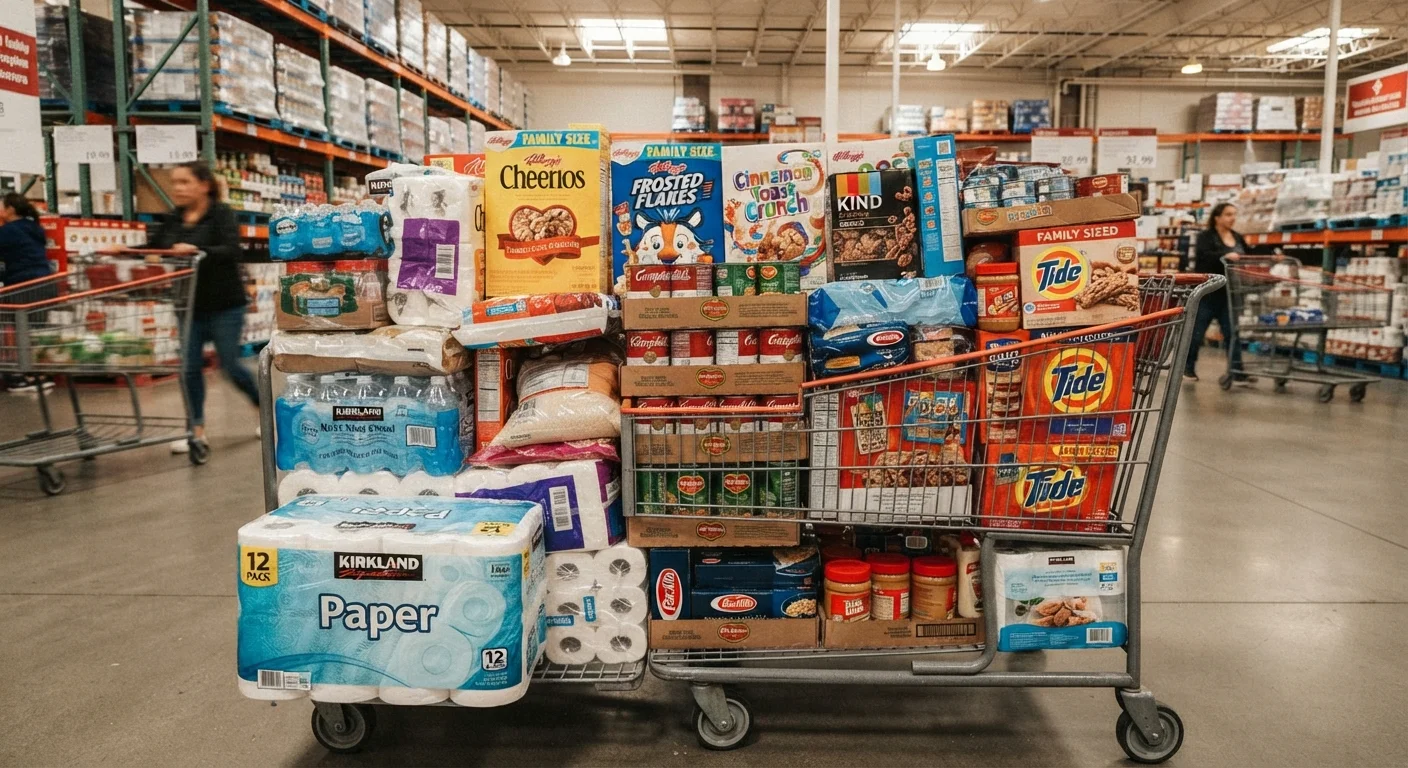
- Toilet paper, paper towels, and dish soap do not expire on any practical timeline for a family of four.
- Dry pantry staples such as rice, dried beans, oats, and pasta can be stored for a year or more in sealed containers without quality loss.
- Cleaning supplies like laundry detergent and multi-surface spray are used at a predictable rate and store easily.
- Frozen proteins, when vacuum-sealed and managed with a first-in, first-out rotation, can cut per-pound costs significantly at warehouse stores.
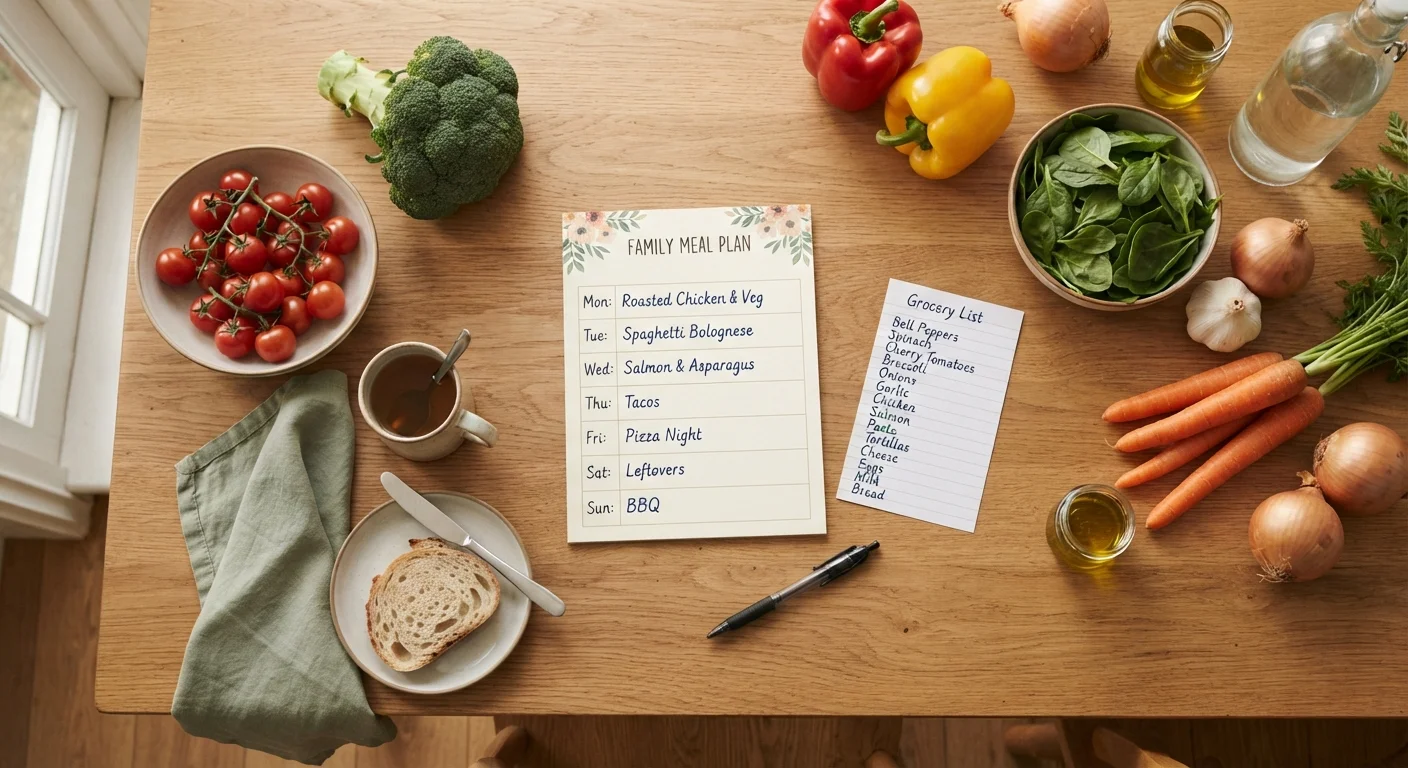
Families who also plan meals weekly get even more from bulk food purchases because they know exactly how much of any ingredient they will use. Meal planning and bulk buying reinforce each other in ways that reduce both waste and total food spend.
~$100
Average U.S. household annual food waste cost
The USDA estimates that American households waste between 30 and 40 percent of the food supply, with significant cost implications at the household level.
10-30%
Typical unit-price reduction when buying in bulk
Consumer Reports has documented that bulk quantities of shelf-stable goods commonly cost 10 to 30 percent less per unit than standard retail sizes.
When bulk buying quietly costs you more
Bulk buying fails the budget in predictable ways that are easy to miss at the point of purchase.
Perishables often expire before they are used
Food with a short shelf life bought in bulk creates waste that eliminates the per-unit savings entirely and often costs the household more in total.
Membership fees must be earned back in savings
Warehouse club annual fees typically run between $50 and $130 per year, meaning families must save at least that much through bulk purchases before the math works in their favor.
Upfront cost strains a tight monthly budget
A bulk purchase may lower the annual cost of a product while still creating a cash flow problem in the month it is bought, particularly for families without a buffer.
Storage space is a real constraint
Bulk quantities require adequate, appropriate storage, and families without a pantry, garage, or extra freezer often cannot take advantage of the savings.
Unfamiliar products bought in bulk are high-risk
Trying a new product in a large quantity before knowing whether the household likes or uses it regularly can result in wasted money and unwanted goods.
Fresh produce is the most obvious trap. A five-pound bag of spinach costs less per pound than a single bag, but most families cannot finish it before it wilts. The same applies to bakery items, deli meats, and any refrigerated product with a short window.
Membership fees add a fixed annual cost that must be recovered through actual savings before bulk buying breaks even. Families who shop warehouse clubs infrequently may not save enough in a year to offset that fee. This is a version of the spending leak that families overlook until the totals are compared honestly.
Buying unfamiliar products in bulk because the unit price looks attractive is another common mistake. If the product does not suit the household, the entire quantity is a loss.
Pros and practical limits
Lower cost per unit on non-perishable staples
Buying in larger quantities almost always reduces the per-unit price on products with long shelf lives, which adds up across a year of regular household use.
Fewer shopping trips over time
Stocking up on staples means less frequent trips to the store, which saves fuel and reduces the chance of impulse purchases.
Protection against routine price increases
When a product's price rises, households already stocked at the prior price absorb that increase more slowly than those buying week to week.
Consistent availability of household basics
Running out of toilet paper or cleaning supplies mid-week is a minor but real disruption; a well-stocked supply eliminates that friction.
The advantages of bulk buying are real, but they come with conditions. Storage capacity is a physical constraint: a small apartment cannot absorb 40 rolls of paper towels the way a house with a dedicated pantry can. Families without extra freezer space cannot take full advantage of bulk meat pricing. These are not minor caveats; they determine whether the savings are accessible at all.
Frugal decisions account for total cost, not just the per-unit figure at the shelf. A bulk purchase that requires renting extra storage, or that results in 20% waste, has already undercut its own case.
A simple check before you fill the cart
A quick check on consumption rate
Write down how long a standard-size package of a product lasts in your home. Then divide the bulk quantity by that rate to see how many months of supply you would be buying. If that number is much longer than the product's realistic shelf life or your storage window, the bulk deal is not actually a deal for your household.
Before adding a bulk item to the cart, three questions help filter good deals from expensive-looking ones. First, what is the realistic consumption rate in your household? Second, does the product have a shelf life that fits that rate? Third, is there a place to store it without creating clutter or crowding out other necessities?
Families who track even rough estimates of how fast they go through staples will find this check takes seconds. Those who do not track tend to overbuy based on optimism rather than habit, which is how bulk buying quietly shifts from savings strategy to deal-chasing behavior that feels productive but is not.
Applied with discipline to the right product categories, bulk buying is one of the more straightforward ways to reduce what a family spends on household goods each month. Applied broadly without those filters, it becomes one more way that good intentions produce higher receipts.