
Why a checklist beats a shopping trip
Most back-to-school overspending happens before a single item hits the cart. Families head to the store with a vague mental list, kids in tow, and walk out having spent twice what they planned. A short audit session at home changes that pattern by separating what you need from what you already have.
Back-to-school spending is one of the larger seasonal budget events for American households, competing with holiday shopping for impact on the family budget. The problem is not that school supplies are inherently expensive. It is that the shopping happens under time pressure, often without a full picture of what is already in the closet, the backpack, or the junk drawer. This checklist gives you that picture first.
If you are working from a household budget or building one for the first time, see our guide to family budgeting from scratch before you set your spending cap for this season.
Avoid setting your budget based on store displays
Retail back-to-school displays are designed to show you the broadest possible range of items, including many your child's teacher will never ask for. Set your spending cap before you walk into any store, and base it on your household budget and the official supply list, not on what is stocked on the shelf.
How to use this checklist
Work through each group in order. The audit steps come first because they determine what you actually need to buy. Skipping the audit and going straight to shopping is the most common and costly mistake families make each year.
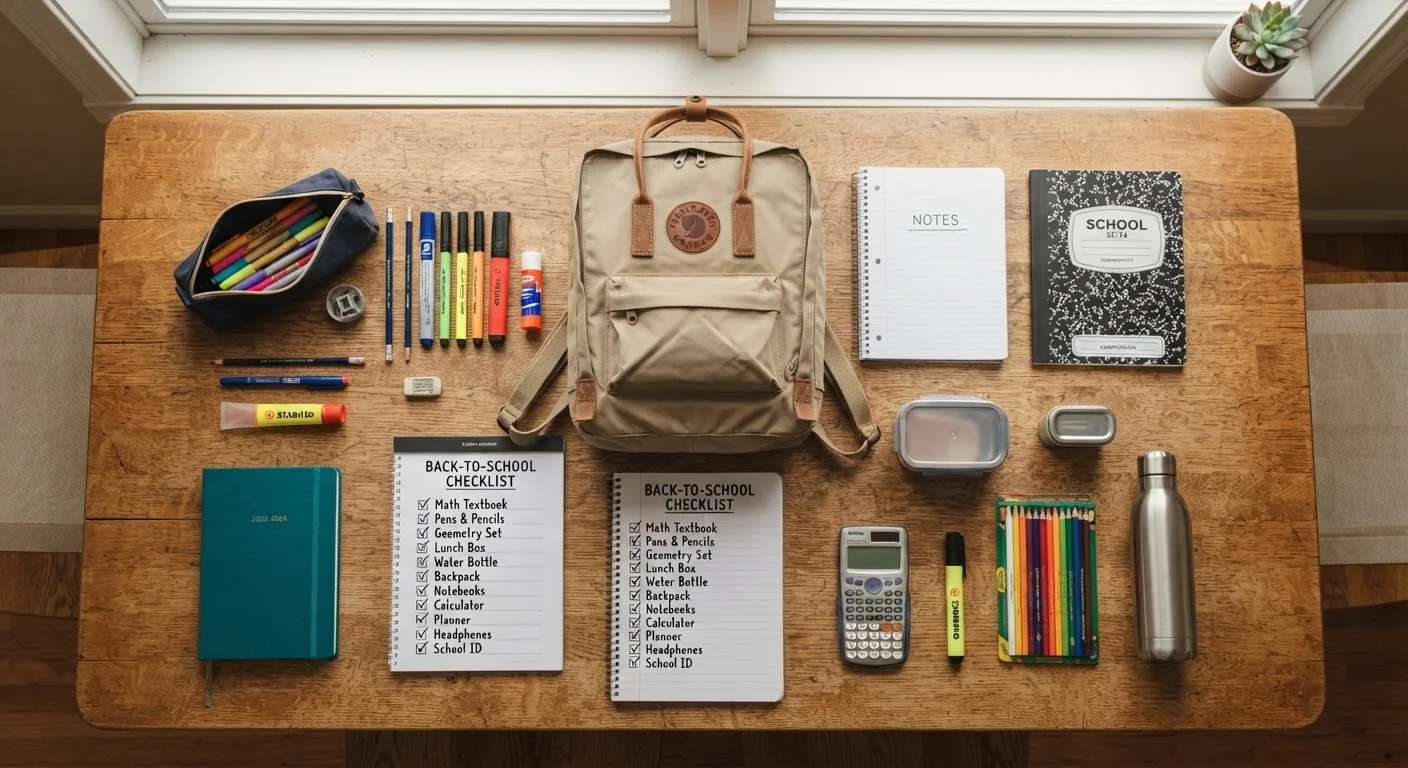
Bring your child along for the inventory steps if they are old enough. They will remember details about their supplies, preferences, and what broke or wore out last year that you will not. Keep a running list in two columns: what you have and what you need to replace or add.
This process works the same way as the car cost audit we cover in our annual car cost audit: a structured look at what you already own and what genuinely needs spending before you commit any dollars.
Audit what you already have
Get the real supply list before spending anything
Set your budget before you shop
Shop with a written list and no extras
Wrap up and track what you spent
Buying smart once you know the gaps
After the audit, you will have a specific list. That specificity is your main cost control. Retailers and supply displays are designed to expand lists, not shrink them. Go in with your written list and treat anything not on it as out of scope for this trip.
A few practices that hold up across different budgets and family sizes:
- Check your state's tax-free weekend dates. Most states that offer these events publish eligibility rules by item category and price cap. Buying outside those rules means no exemption applies.
- Generic or store-brand versions of consumable supplies (paper, folders, basic pens) are functionally identical to branded versions for most school use cases.
- Clothing bought one size up for a growing child often gets worn longer than a perfect fit bought in August.
- Shoes are worth spending more on if a child will wear them every day for ten months. A cheap pair replaced mid-year often costs more in total.
Bulk buying can work for consumable supplies, but it is worth understanding when it actually saves money and when it does not. Our piece on buying in bulk covers how to tell the difference before you fill the cart.
The same discipline that prevents grocery overspending applies here: a written list, a firm budget per child, and no browsing outside your planned categories.
School supply list from the district or teacher
The only reliable source of what your child's classroom actually requires this year.
Spreadsheet or notepad
Records your inventory, gaps, and per-child budget so you can track spending against your cap.
State tax-free weekend schedule
Confirms which items and price points qualify for any sales tax exemption in your state.
Envelope or folder for receipts
Keeps all purchase receipts together for returns, exchanges, and end-of-season review.