
Why fuel economy myths persist
Many fuel-saving beliefs originated when cars used carbureted engines and leaded gasoline. Technology has changed substantially since then, but the advice stuck. Drivers repeat what they heard from parents or mechanics decades ago, often without checking whether it still applies. The cost of acting on outdated information adds up: at current gas prices, a household driving 15,000 miles a year can lose hundreds of dollars annually to habits that accomplish nothing.
This is general educational information about how modern vehicle systems work. For decisions specific to your vehicle, consult your owner's manual or a qualified mechanic.
If you want a broader picture of where fuel sits within your total vehicle budget, see what total cost of ownership actually includes.
Common myths, corrected
The myths below appear repeatedly in online forums and gas station conversations. Each one has a measurable effect on what drivers spend.
Myth
You should let your car idle for several minutes before driving in cold weather to protect the engine.
Fact
Modern fuel-injected engines reach operating temperature faster by being driven gently than by sitting still.
Carbureted engines, common before the late 1980s, needed time to stabilize fuel delivery in cold conditions. Fuel-injected engines, standard on virtually every vehicle sold since the early 1990s, use sensors to adjust the fuel mixture automatically. Extended idling on a cold morning wastes fuel, increases engine wear by washing oil off cylinder walls, and in colder climates can actually prolong the time before the engine reaches its efficient operating range. Thirty seconds of idling is enough to circulate oil; after that, gentle driving warms the engine more efficiently.
Myth
Premium gasoline improves performance and fuel economy in any car.
Fact
Premium fuel benefits only engines specifically designed or tuned to require it; using it in a regular-grade engine produces no measurable gain.
The octane rating on a fuel pump indicates resistance to premature ignition (knock), not energy content or cleaning ability. Engines with high compression ratios or turbochargers may genuinely require 91 octane or higher to function correctly. For the majority of vehicles on U.S. roads, the owner's manual specifies regular 87-octane fuel. Paying the typical 20 to 50 cent per-gallon premium for a car that does not require it is a direct, avoidable cost. Check the fuel door sticker or owner's manual: if it says 'recommended' rather than 'required,' the engine's knock sensors will adjust timing automatically and you will not notice a difference.
Myth
Opening the windows is always more fuel-efficient than using air conditioning.
Fact
At highway speeds, the aerodynamic drag from open windows typically cancels out or exceeds the fuel cost of running the air conditioner.
At low speeds, particularly in city traffic below roughly 45 mph, open windows have minimal aerodynamic impact and air conditioning does impose a measurable load on the engine. At highway speeds, open windows increase drag enough to offset the savings. The Society of Automotive Engineers has conducted tests showing that running AC at highway speeds is generally comparable to or more efficient than driving with windows down on most passenger vehicles. A reasonable approach: use windows in slow traffic, switch to AC on the highway.
Myth
Inflating tires above the door-placard pressure improves fuel economy.
Fact
Over-inflation reduces the contact patch between tire and road, which shortens tire life and compromises handling without a reliable fuel economy benefit.
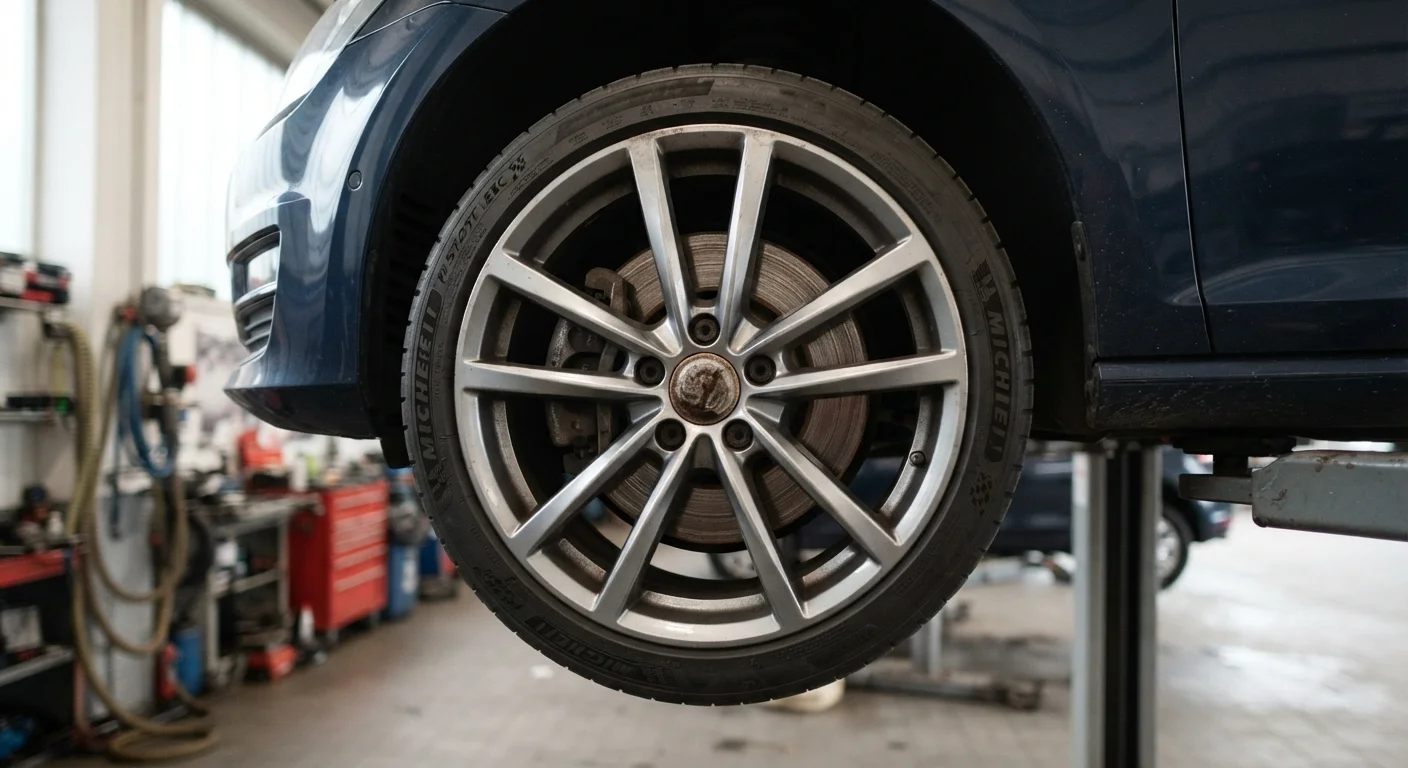
Under-inflated tires do increase rolling resistance and reduce fuel economy, so keeping tires properly inflated matters. However, the correct target is the pressure listed on the vehicle's door jamb sticker, not the maximum pressure printed on the tire sidewall. That sidewall number is the tire's structural limit, not a driving recommendation. Running tires 10 or 15 psi above the placard pressure produces a harsher ride, uneven tread wear, and longer stopping distances. The fuel economy difference is negligible and varies by vehicle; the safety trade-off is not worth it.
Myth
Turning the engine off at long red lights wastes more fuel than idling.
Fact
Idling for more than about 10 seconds consumes more fuel than a restart on modern vehicles.
This myth stems from older starter motors that drew heavily on the battery and caused measurable engine wear during cold starts. Contemporary starters and engine management systems have made restarts far less costly. The U.S. Department of Energy notes that idling a typical vehicle for one hour burns roughly a half gallon to a full gallon of fuel depending on engine size. At a prolonged rail crossing or a long construction-zone signal, shutting the engine off is the fuel-saving choice. Many newer vehicles include automatic stop-start systems that do exactly this, which is evidence the engineering community settled this question some time ago.
Myth
A manual transmission always gets better fuel economy than an automatic.
Fact
Modern automatic and continuously variable transmissions frequently match or exceed the efficiency of manual transmissions in EPA testing.
For much of automotive history, the mechanical simplicity of a manual gearbox did produce better fuel economy. Current multi-speed automatics with 8, 9, or 10 ratios, and continuously variable transmissions (CVTs), are engineered to keep the engine near its most efficient operating range at all times. EPA fuel economy figures for many current models show automatic variants at parity with or ahead of their manual counterparts. Driver behavior still matters: a manual driven aggressively will use more fuel than an automatic driven smoothly, and vice versa.
Driving behavior matters more than you might expect
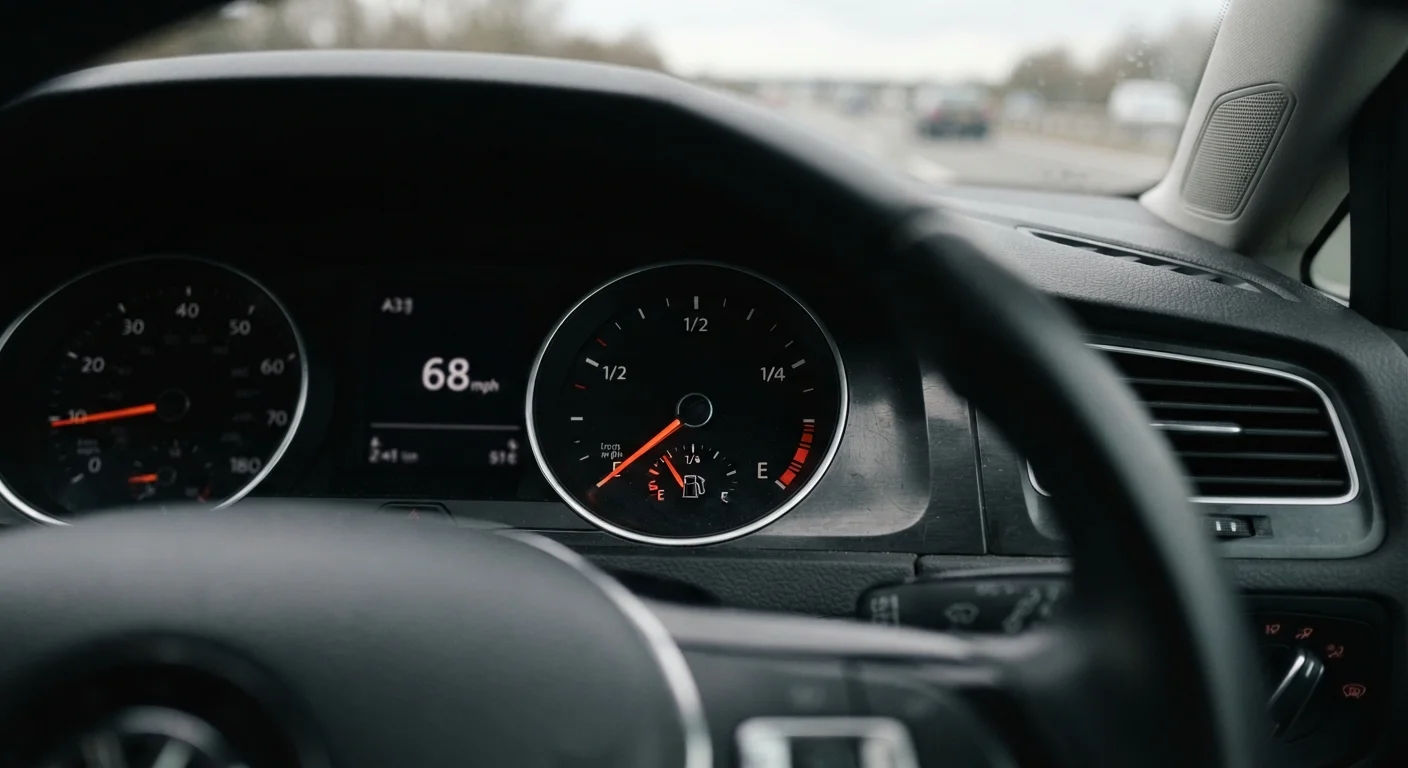
Beyond the individual myths above, the single largest variable in real-world fuel consumption is how a vehicle is driven. Aggressive acceleration and hard braking can reduce fuel economy by 15 to 30 percent on highways, according to the U.S. Department of Energy. Steady throttle input, anticipating stops, and maintaining consistent speed on open roads produce measurable improvements without any additional cost.
Short trips are worth particular attention. A cold engine running on a sub-optimal fuel mixture for the first few minutes of every trip consumes more fuel per mile than the same distance covered mid-journey. Combining errands into one outing rather than making several separate short trips is one of the more practical ways to lower weekly fuel use. Driving habits that quietly wear out your car faster covers the overlap between fuel waste and premature component wear.
Over-inflated tires affect braking distance
Tires inflated significantly above the door-placard pressure have a smaller contact patch with the road. This can extend stopping distances in emergency braking situations. Always use the pressure specified on the vehicle's door jamb sticker, not the tire sidewall maximum. Check pressure when tires are cold for an accurate reading.
For maintenance habits that support both reliability and fuel efficiency over time, keeping your car reliable without breaking the budget is a practical companion read.