
What a repair estimate is and why it matters
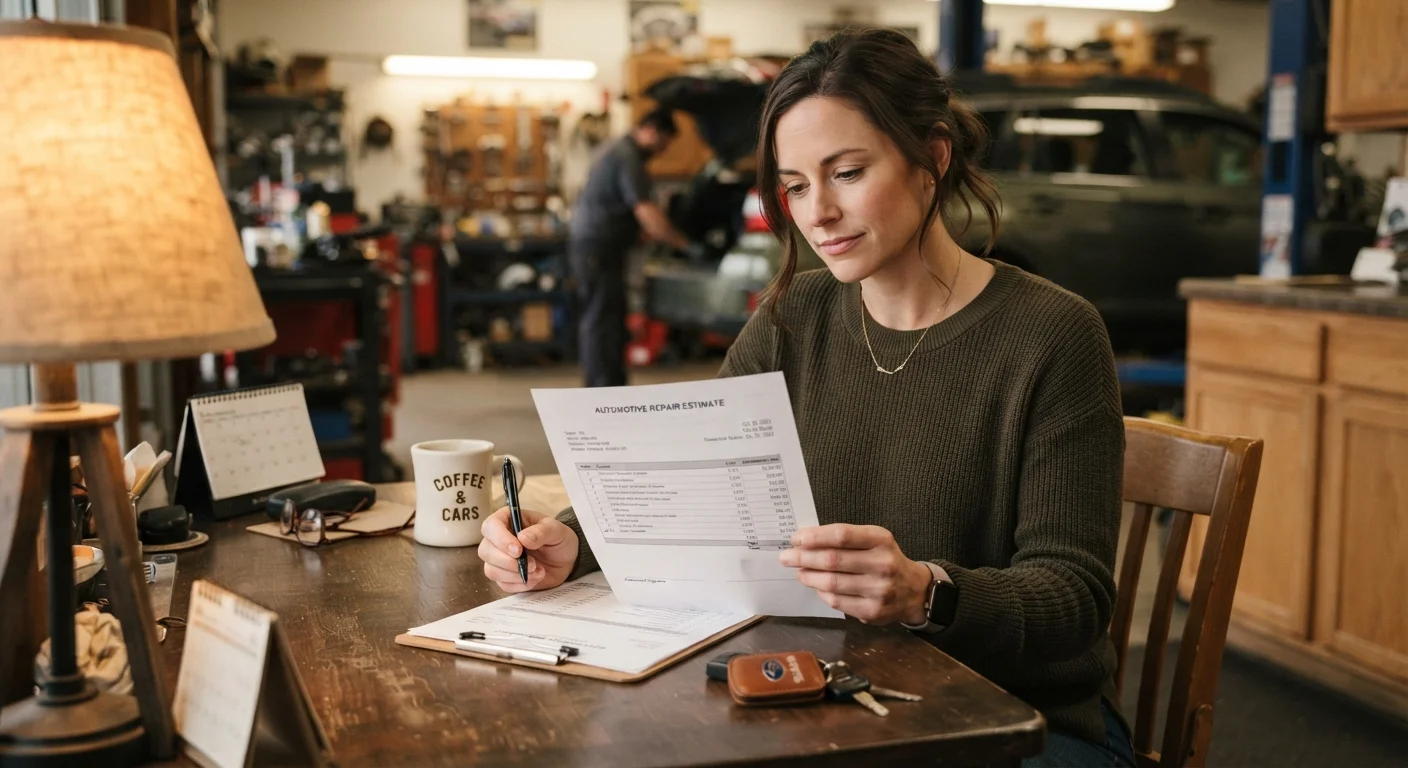
A repair estimate is a written breakdown of the work a shop plans to do on your vehicle, along with the expected cost of each part and the labor needed to install or service it. Most states require shops to provide a written estimate before beginning any paid work, though the exact rules vary. Checking your state's consumer protection guidelines will tell you what disclosures are required where you live.
The estimate is not just paperwork. It is the document that governs what you authorize and, if disputes arise, what you agreed to pay. Reviewing it carefully before you sign gives you a chance to ask questions while you still have options. Once work begins, stopping it mid-job often costs more than finishing it.
For context on how repair costs fit into your broader auto budget, see your annual car cost audit.
What you will need
Understanding every line on the estimate
Most estimates follow the same structure. Knowing what each section means lets you evaluate it efficiently.
Labor charges
Labor is listed as a rate per hour multiplied by a number of hours. The hours figure usually comes from a flat-rate guide, which is a published reference that assigns a standard time to each procedure regardless of how long the specific job actually takes. A shop charging 2.5 hours to replace front brake pads is using that guide, not a stopwatch. If the quoted hours seem high, you can ask which guide the shop uses and look up the same code yourself through publicly available references.
Parts
Each part should appear with a description, a part number, and a price. Watch for two designations. OEM (original equipment manufacturer) means the part matches what the vehicle left the factory with. Aftermarket means a third-party part built to fit the same application, often at a lower price. Both can be acceptable, but they typically carry different warranties. Ask the shop about the warranty on any part before authorizing it.
Fees and shop supplies
Many shops add a line for shop supplies (rags, cleaning solvents, fluids used in small quantities) as a percentage of the total or a flat fee. This is normal, but there is no industry standard rate. If that line is a large dollar amount, ask for a breakdown.
Taxes and disposal fees
Sales tax on parts and, in some jurisdictions, on labor is added at the end. Disposal fees for fluids and worn parts (tires, batteries, oil) are regulated in many states and should be itemized separately.
Get a second estimate for large repairs
For any repair quoted above a few hundred dollars, calling one or two other shops for competing estimates takes about fifteen minutes and gives you a factual price range. You do not need to explain why you are shopping around. Prices for the same job vary across shops in the same market, and knowing that range helps you evaluate whether the first quote is reasonable.
How to review and respond to an estimate
Work through the estimate in order before signing anything.
Confirm the vehicle and complaint are described correctly
Check that the year, make, model, and VIN on the estimate match your vehicle. Confirm that the listed complaint or diagnosis matches the problem you reported. Errors here can lead to the wrong repair being authorized.
Separate required repairs from recommended ones
Shops often include maintenance items or upcoming-concern notes alongside the repair you came in for. These are not the same thing. Circle or list each line and ask: is this needed to address the current problem, or is this a separate recommendation? You are not obligated to do everything on one visit.
Check labor hours against a flat-rate reference
Most public libraries and several free automotive websites publish flat-rate labor guides by procedure. Look up the specific job on your estimate. If the shop's quoted hours are meaningfully higher than the standard, ask how they arrived at that figure. Some jobs legitimately take longer on high-mileage or corroded vehicles, but the shop should be able to explain the difference.
Verify parts descriptions and ask about warranty
Confirm each part has a description and a part number. Ask whether parts are OEM or aftermarket and what warranty the shop provides on those parts. A warranty of at least 12 months or 12,000 miles on parts and labor is common at many independent shops, though this varies. Get the warranty terms in writing before authorizing.
Ask what happens if the cost changes mid-repair
Shops sometimes discover additional problems once a repair is underway. Ask what the shop's policy is when the actual cost will exceed the estimate. In many states, shops are required to contact you for authorization before exceeding a threshold above the written estimate. Know that threshold before work starts.
Sign only what you intend to authorize
If you want to proceed with some repairs and not others, ask the shop to mark the declined items clearly on the estimate or write a separate authorization for only the approved work. Keep your signed copy. This document is your primary protection if the final invoice differs from what you agreed to.
Consistent maintenance habits also reduce how often you face large repair bills. The article on keeping your car reliable without breaking the budget covers preventive strategies that apply year-round.
This article is for general informational purposes only and does not constitute legal or financial advice. Requirements for written estimates and consumer protections vary by state; verify the rules that apply in your location before relying on any specific right described here.