

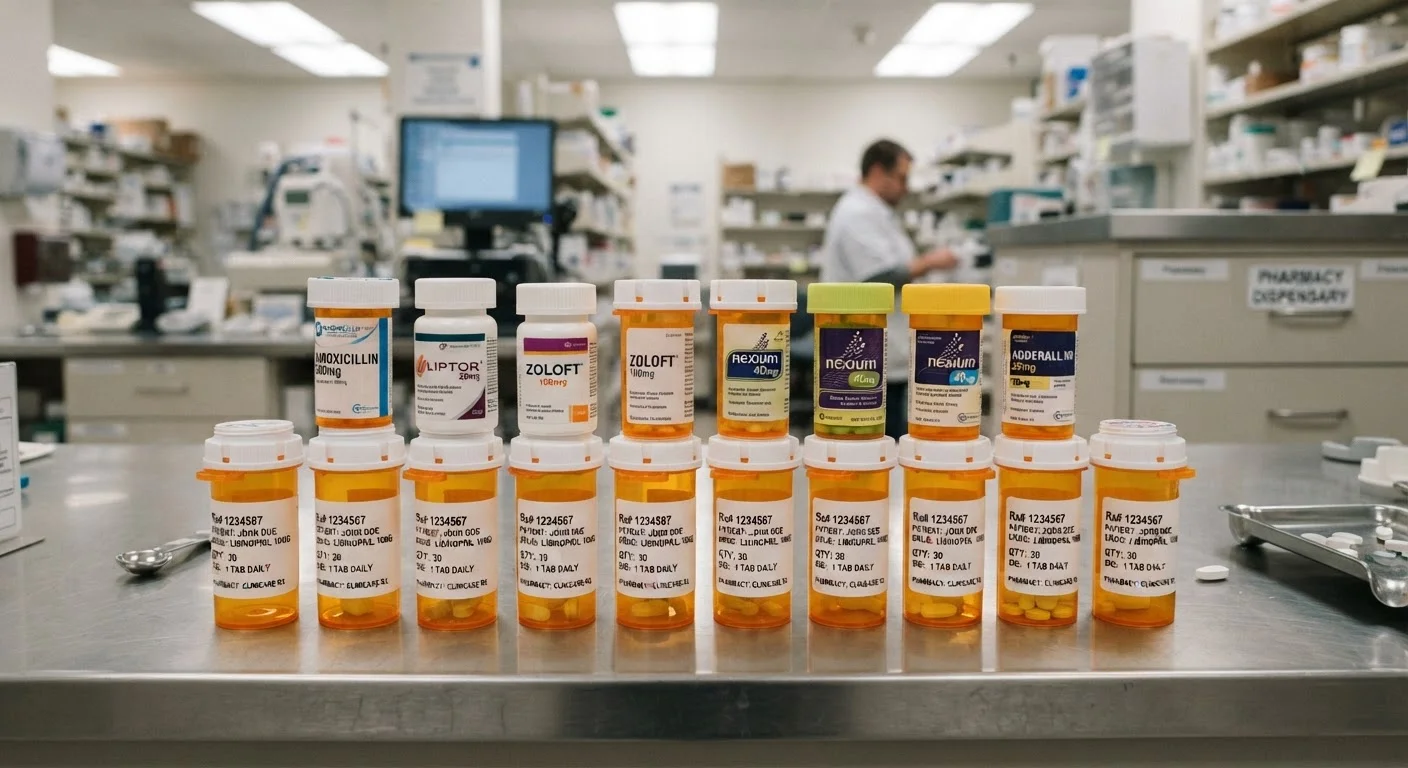
What actually makes a drug "generic"
A generic drug is a copy of a brand-name drug that has the same active ingredient, concentration, dosage form, and intended use. The U.S. Food and Drug Administration (FDA) requires generic manufacturers to prove their product is bioequivalent to the original before it can be sold. Bioequivalence means the generic delivers its active ingredient into the bloodstream at a rate and extent that falls within an accepted statistical range compared to the brand-name version.
Brand-name drugs are developed by pharmaceutical companies that hold patents, usually for around 20 years from the date of filing. During that period, no competitor can legally copy the formula. Once the patent expires, other manufacturers can apply for FDA approval to produce and sell the generic version. Because generic manufacturers do not repeat the original clinical trials or carry the same research costs, they can price their products far lower.
The term "generic" does not mean inferior. It means a different manufacturer produced the same therapeutic compound after demonstrating it meets FDA standards. This distinction matters for families weighing their options at the pharmacy counter. For more on making value-based decisions about household spending, see what separates frugality from cheapness.
Where generics and brand-name drugs genuinely differ
The active ingredient must be identical, but inactive ingredients (called excipients) can vary. Excipients include fillers, binders, dyes, and coatings that affect a pill's appearance, taste, or how it holds together. For most people, this difference has no clinical consequence. However, a small number of patients with allergies to specific dyes or fillers may react differently to one formulation versus another.
A second real difference involves narrow therapeutic index (NTI) drugs. These are medications where a small change in blood concentration can cause treatment failure or toxicity. Examples include certain anticoagulants, thyroid hormones, and anti-seizure medications. For NTI drugs, some clinicians prefer that patients stay with one consistent manufacturer rather than switching between suppliers, whether brand or generic. The FDA has specific guidance on NTI drugs, and the decision about consistency belongs to a prescribing clinician who knows the patient's history.
Extended-release formulations are another area worth attention. A generic must match the brand-name drug's release characteristics, and the FDA tests for this. Still, if a patient notices a change in symptom control after switching formulations, that observation is worth reporting to a doctor or pharmacist rather than dismissing.
| Criterion | Brand-name medications | Generic medications |
|---|---|---|
| Active ingredient | Original compound | Identical to brand |
| FDA approval required | Yes, full clinical trials | Yes, bioequivalence studies |
| Inactive ingredients | Set by original manufacturer | May differ by manufacturer |
| Average cost difference | Higher (patent-protected) | 80-85% less on average |
| Availability | Always available | Only after patent expiry |
| Appearance | Consistent brand look | Varies by manufacturer |
| NTI drug considerations | Consistent formulation | Discuss consistency with doctor |
Cost differences and what they mean for families
The FDA reports that generics cost 80 to 85 percent less than brand-name drugs on average. For a family managing one or more chronic conditions, that difference compounds quickly. A maintenance medication costing $200 per month as a brand-name product might cost $15 to $30 as a generic, depending on the drug and the pharmacy.
Many community health centers and state pharmacy assistance programs stock generics at reduced or no cost for qualifying households. The federal government's Health Resources and Services Administration (HRSA) maintains a directory of federally qualified health centers where sliding-scale services are available. Some chain pharmacies also run low-cost generic programs that are publicly advertised and do not require membership, though the specific offerings vary by location and change over time.
Buying a 90-day supply instead of 30 days often reduces the per-unit cost further, where the drug's stability and your supply needs allow. That decision is worth discussing with a pharmacist, similar to how bulk buying of any household product requires a practical cost-benefit check. Buying in bulk follows the same logic: volume can save money, but only when the circumstances fit.
80-85%
Average cost savings with generics
According to the U.S. Food and Drug Administration, generics cost 80 to 85 percent less than their brand-name equivalents on average.
90%
Share of U.S. prescriptions filled as generics
The FDA reports that approximately 90 percent of prescriptions dispensed in the United States are filled with generic drugs.
$313B+
Annual savings from generic drug use
The Association for Accessible Medicines has reported that generic and biosimilar drugs save the U.S. healthcare system hundreds of billions of dollars annually.
Questions worth asking your pharmacist or doctor
Before switching any medication, or when a pharmacist substitutes a generic at the counter, a few direct questions can clarify the decision:
- Is there an FDA-approved generic for this specific drug?
- Does this medication have a narrow therapeutic index that makes formulation consistency important?
- Are there inactive ingredients in the available generics that I should know about given my allergy history?
- If I notice a change in how I feel after switching, what should I do?
Pharmacists are an underused resource for exactly these questions. They can see every medication in a patient's profile, check for interactions, and compare formulations. Many pharmacies offer consultations at no charge. For people without regular insurance coverage, a pharmacist consultation at a community clinic or federally qualified health center can substitute for a specialist visit on routine medication questions.
This article is for general informational purposes only and is not medical advice. Always consult a qualified healthcare professional before making changes to any medication regimen, especially for chronic conditions or medications with narrow therapeutic windows.