

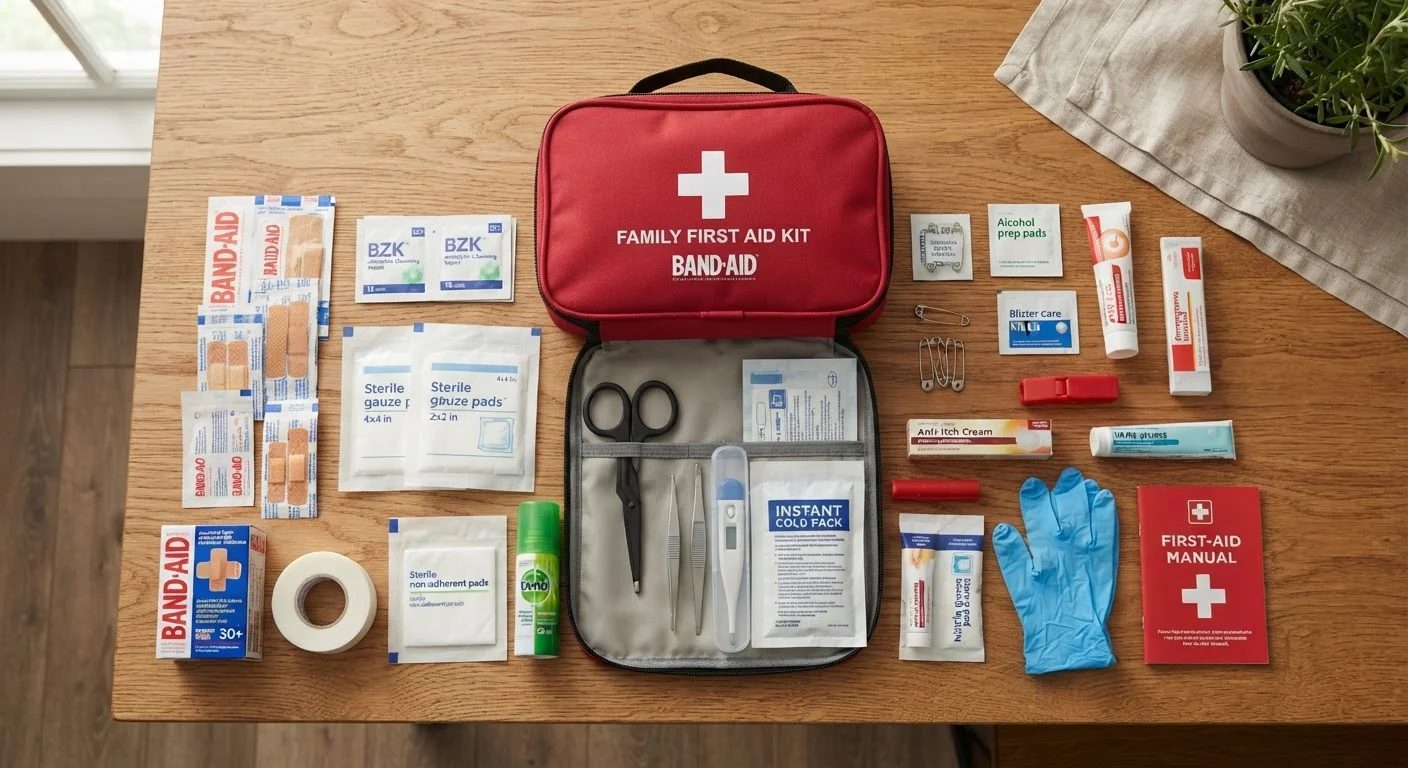
Why a first-aid kit belongs in your household budget
A single urgent care visit for a minor cut, burn, or allergic reaction can cost $150 or more without insurance, and well over $50 even with a copay. A stocked first-aid kit handles most of those situations at home for a fraction of that cost. For families watching every dollar, that math is straightforward.
The goal here is not to build a hospital cabinet. It is to have what you actually need for the injuries and illnesses that happen most often: cuts, scrapes, sprains, fevers, and minor allergic reactions. Anything beyond that warrants a call to a healthcare provider or a trip to a clinic.
If you are already tracking household spending, a first-aid budget line fits naturally alongside other preventive expenses. See our guide to family budgeting from scratch for ideas on how to carve out a small monthly amount for health preparedness. Pairing this kit with the free preventive care your insurance likely covers can reduce out-of-pocket health costs even further.
This article is general health information and is not a substitute for professional medical advice. Always contact a qualified healthcare provider for symptoms, emergencies, or questions about your family's specific health needs.
What to gather before you shop
Before spending anything, do a quick audit of what you already have. Check bathroom cabinets, kitchen drawers, and any existing travel bags. Many families already own a thermometer, a partial box of adhesive bandages, and some pain reliever, and those items do not need to be repurchased.
Write down what you have, note expiration dates, and identify the gaps. Then use the checklist below to build a targeted shopping list rather than buying a pre-packaged kit that may include items you do not need while missing ones you do.
Pen and paper (or a notes app)
Record what you already own before shopping so you avoid duplicate purchases.
A sturdy container with a latch
Keeps all supplies together, dry, and accessible in one place; a plastic storage box or a zippered bag both work.
Permanent marker
Label compartments and write expiration check dates directly on the container.
Small resealable plastic bags
Organize loose items like gauze pads and safety pins within the kit.
First-aid reference card
A printed or laminated quick-reference guide for common procedures; the American Red Cross offers downloadable versions at no cost.
The full first-aid kit checklist
Work through each group below. Items marked "must" are the core of a functional kit. "Should" items handle common situations that arise in most households with children. "Nice to have" items add convenience without being critical.
Wound care basics
Tools and instruments
Medications and relief
Documentation and organization
A first-aid kit does not replace emergency care
This kit is for minor injuries and common ailments. If a family member shows signs of a severe allergic reaction, difficulty breathing, heavy bleeding that does not stop, loss of consciousness, or any symptom that concerns you, call 911 or go to an emergency room immediately. Do not delay emergency care to treat a serious situation at home. Always consult a qualified healthcare provider about medications, especially for children and anyone with a chronic health condition.
Keeping costs low without cutting corners
Generic or store-brand versions of nearly every item on this list perform the same function as name-brand versions for common first-aid use. Adhesive bandages, gauze pads, and antiseptic wipes are not meaningfully different between brands. Pain relievers like acetaminophen and ibuprofen are sold as generics at significantly lower prices than branded equivalents; the active ingredient and dosage are the same when you match them label to label.
A few places worth checking for low-cost supplies: dollar stores often carry bandages, gauze, and cold packs. Community health centers sometimes distribute basic first-aid items at no cost. Local health departments occasionally hold preparedness events where supplies are available free. Buying individually rather than in a pre-assembled kit usually costs less and lets you choose exactly what your family needs.
One annual check, ideally at the same time each year, is enough to replace expired items and restock anything used. That habit keeps your kit current without a large recurring expense. For families building out a broader household budget, this kind of small, scheduled spending fits well within a monthly plan. See the step-by-step monthly budget walkthrough for a practical framework.
Check pediatric medication dosing carefully
Children's doses for acetaminophen and ibuprofen are based on weight, not age. Read the label instructions on every product before giving any medication to a child, and ask your child's healthcare provider if you are unsure about the correct amount. Never give aspirin to children or teenagers without direct guidance from a healthcare professional, as it carries specific risks for that age group.
Expired supplies can fail when you need them most
Antiseptics lose effectiveness after their expiration date, and medications should not be used past theirs. Check dates at least once a year and dispose of expired items properly. Many pharmacies and local health departments have medication disposal programs so unused or expired drugs do not end up in waterways or accessible to children.