

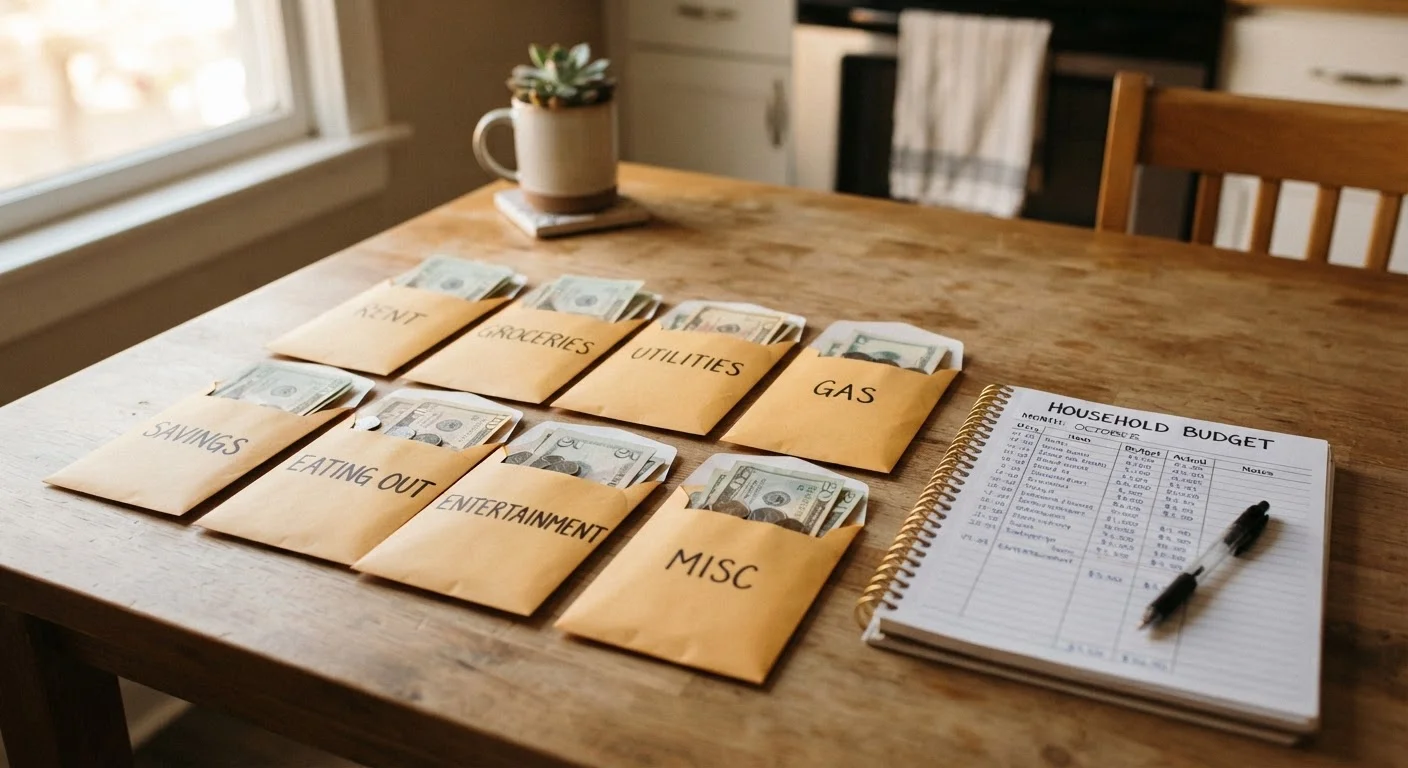
How the envelope system works
At the start of each pay period, you withdraw enough cash to cover your variable spending categories for that period. You label an envelope for each category: groceries, gas, dining out, kids' activities, clothing, and so on. You put the budgeted cash amount into each envelope, and those envelopes fund all spending in their respective categories until the next pay period.
The boundary is physical and immediate. When you reach into the grocery envelope and find $12 left with four days to go, that is real information requiring a real decision. A debit card balance delivers the same data in theory, but in practice most households do not check it at the register.
Fixed expenses, things like rent, car payments, and insurance, typically stay outside the envelope system and are handled by automatic transfers or online bill pay. Envelopes work where discretionary spending happens, which is where most household budgets drift.
Getting the category amounts right is the hardest part of setup. Pull two to three months of bank and card statements, sort transactions by category, and use the average as your starting envelope amount. Expect to adjust after the first month.
Why it works when other methods stall
Budgeting systems fail most often not from bad math but from the gap between knowing a limit and feeling it. Swiping a card or tapping a phone does not register the same way as handing over paper bills. Consumer behavior research has documented that people tend to spend more when using cards versus cash, partly because the physical act of parting with money triggers a stronger awareness of cost.
Start with your two hardest categories
Most families have one or two spending categories that consistently blow past their limits: often groceries and dining. Set up envelopes for those two first before tackling every category at once. A smaller scope makes it easier to build the habit without overwhelming the system in month one.
Envelopes close that gap. The cash in your hand is not abstract. A family that has consistently overspent on dining out often finds the habit corrects quickly once there is a concrete stack of bills that visibly shrinks with each restaurant visit.
The system also handles a common household problem: different family members spending from the same budget without awareness of what is left. One shared grocery envelope, kept in a common spot, gives everyone the same real-time balance. No app login required.
Adapting envelopes for modern spending
Most families cannot avoid digital payments entirely: online orders, subscription services, and automatic bills do not accept cash. A practical hybrid approach keeps physical envelopes for in-person, discretionary categories while using a checking account with a running tally for everything else.
For households that prefer to stay fully digital, several budgeting apps replicate the envelope structure with virtual categories and hard spending caps. Some banks allow customers to open multiple spending sub-accounts, each labeled for a category. The mechanics are different but the logic is the same: spending in a category stops when the allocated amount is exhausted.
Building a monthly spending plan before setting up envelopes is worth the time, because the envelope amounts only work as well as the underlying plan. Arbitrary limits lead to a month of raiding other envelopes, which defeats the purpose.
Families with irregular income, such as households with freelance or seasonal work, can still use envelopes by funding them as income arrives rather than on a fixed calendar. The category logic stays the same; only the timing shifts. See the sinking fund approach for handling infrequent but predictable costs alongside your envelope categories.
Limitations families should know
Carrying cash has real drawbacks. Cash lost or stolen is gone with no recourse, unlike a debit or credit card with fraud protection. Most families manage this by keeping envelopes at home and carrying only what they plan to spend that day.
The system also demands consistent upkeep. Envelopes need to be replenished each pay period, receipts need to be tracked against cash spent, and any mid-month reallocation needs to be communicated if multiple adults share the budget. For households with low tolerance for that kind of maintenance, a digital replica is usually more sustainable.
Envelope budgeting does not address income problems, debt repayment strategy, or savings goals on its own. It is a spending-control tool. Paired with a broader financial plan, it can stop the discretionary drift that quietly erodes family budgets. Used in isolation, it handles only part of the picture. The comparison between zero-based budgeting and the 50/30/20 rule covers how envelope spending fits within larger frameworks.
This article is for general informational purposes only and does not constitute personalized financial advice. Consult a qualified financial professional for guidance specific to your household's situation.