
What you actually pay at each type of park
Entry costs vary widely across the three categories, and the difference compounds fast when you add campsite fees and permits on top.
National parks charge $15 to $35 per vehicle for a weekly pass at most fee-collecting sites. Yellowstone, Grand Canyon, and Yosemite all sit at $35. Some smaller national monuments and recreation areas charge nothing. The America the Beautiful Interagency Annual Pass costs $80 and covers the pass holder and all occupants of one vehicle at nearly every federal fee site for 12 months. Families who visit two or more fee-charging national parks in a year typically recover that $80 quickly.
State parks run $5 to $15 per vehicle per day in most states, with overnight camping adding $20 to $45 per night depending on hookups and site type. Several states offer their own annual passes in the $50 to $100 range. California's annual day-use pass runs $125; Florida's is around $60. State passes do not transfer across state lines, so a multi-state road trip means buying multiple passes or paying per visit.
City, county, and regional parks are almost always free to enter. Parking may cost $2 to $10 at high-traffic urban locations, and some managed recreation areas charge a modest day-use fee, but the default is no charge at all. For families searching for low-cost destinations, these parks are the easiest wins on a daily budget.
| National parks | State parks | City/county parks | |
|---|---|---|---|
| Typical entry cost | $15 to $35 per vehicle | $5 to $15 per vehicle | Free or $2 to $10 parking |
| Annual pass option | $80 America the Beautiful (federal) | $50 to $125 (state-specific) | Rarely available |
| Campsite cost per night | $20 to $50 (limited availability) | $20 to $45 (more available) | Rarely offered |
| Crowd levels in summer | High to very high | Moderate | Low to moderate |
| Reservation difficulty | High; books months ahead | Moderate; weeks ahead | None required |
| Typical drive from major cities | 2 to 6+ hours | Under 2 hours for most | Under 30 minutes |
| Young-child suitability | Good with planning | Strong; shorter trails, amenities | Excellent; low effort |
Crowds, timing, and how to plan around both
National parks have a crowd problem in summer. Zion, Acadia, and Rocky Mountain National Park each see millions of visitors between June and August. Timed-entry reservations are now required at several popular parks, and some sites sell out months in advance. Arriving outside peak season is the clearest way to avoid this. Mid-September through mid-October gives most national parks thinning crowds, stable weather in many regions, and lower rates at gateway-town motels.
Weekdays are consistently less crowded than weekends at all park types, but the gap is widest at national parks. Arriving at the gate before 8 a.m. on a Tuesday in late September is a different experience from arriving at 10 a.m. on a Saturday in July.
State parks do not face the same reservation pressure in most cases. Campsites at popular state parks in California, New York, and Colorado book up on summer weekends, but midweek slots typically open within a few weeks of the trip date. Less-visited state parks in the Southeast and Midwest often have walk-in availability through most of the year.
City parks have no reservation pressure at all. They work well as unplanned stops on a driving day, giving kids somewhere to run and the family a real lunch break outside the car. See our guide to low-cost family entertainment for more ideas on building these into a trip.
What each park type actually delivers for families
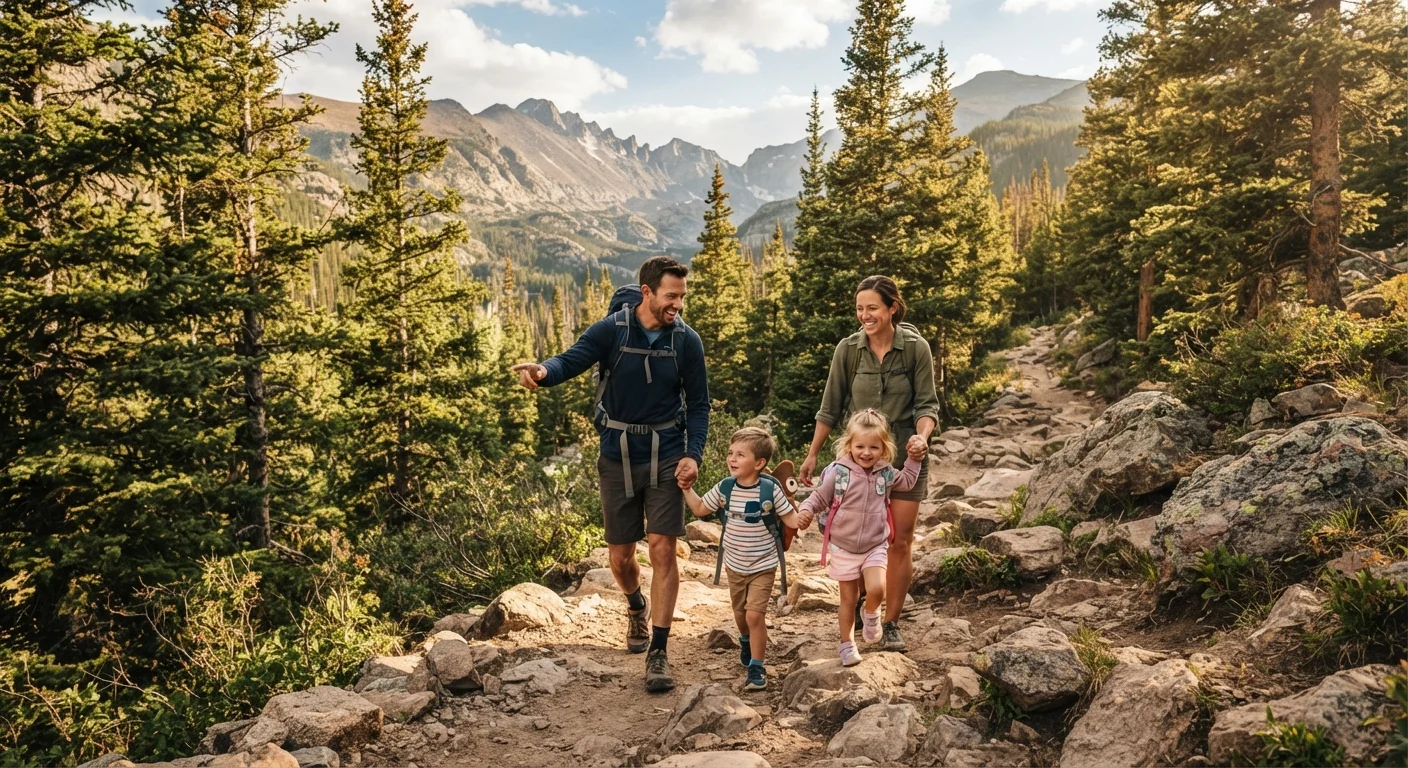
National parks offer scale and ecological variety that state parks rarely match. The backcountry at Glacier, the geothermal features at Yellowstone, and the canyon depth at Grand Canyon are not replicated elsewhere. For families with kids old enough to handle moderate hikes (roughly ages 7 and up), a well-planned national park visit can anchor a road trip in a way that stays with children for years.
The infrastructure at national parks is also more developed: visitor centers with ranger programs, Junior Ranger booklets, accessible paved trails, and interpretive signage throughout. These features reduce the planning burden on parents. The tradeoff is that the most popular facilities are crowded and lodging inside park boundaries is expensive, often $200 to $350 per night, and books up a year in advance.
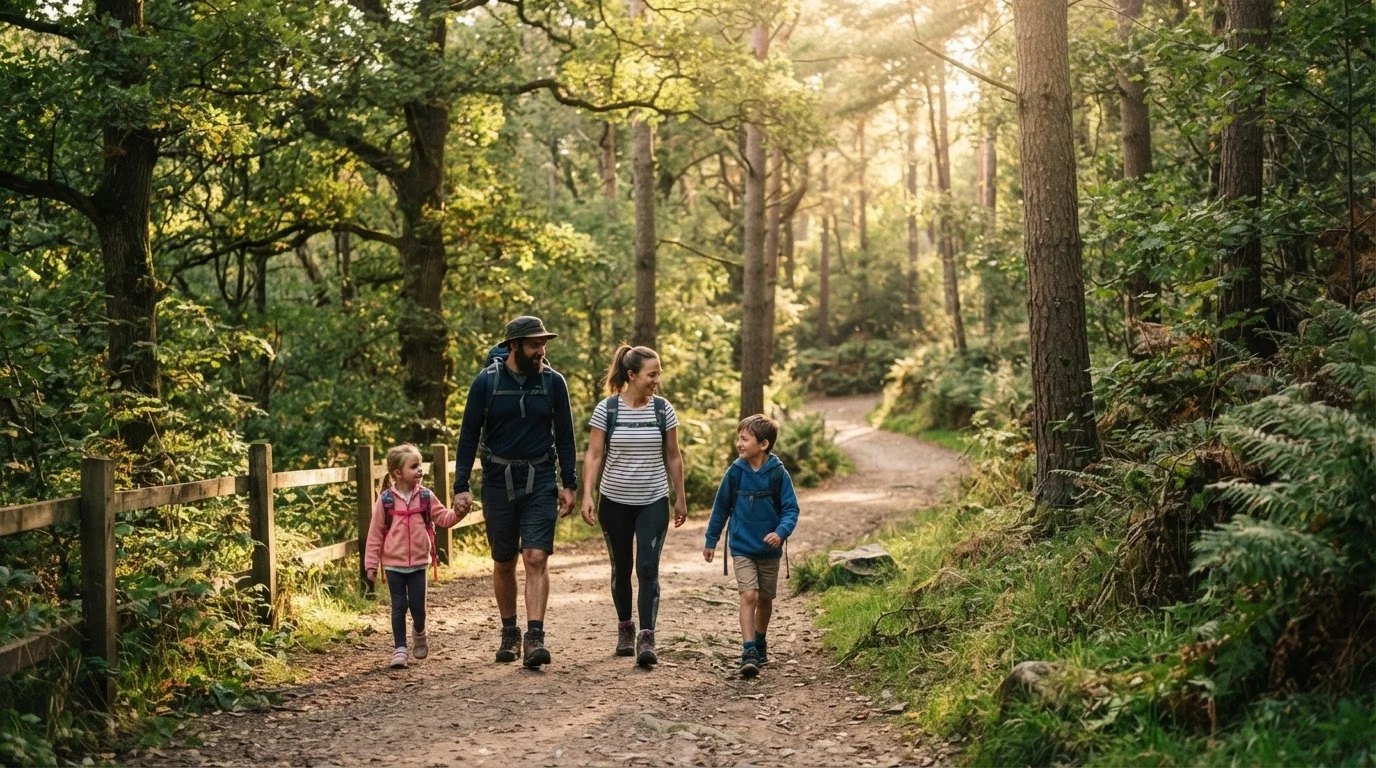
State parks tend to work better for younger children. Shorter trails, beach access, lake swimming, and playgrounds are common. The surrounding areas are usually lower-cost than national park gateway towns, and the drive from most metro areas is under two hours. For families working to reduce overall travel spending, state parks offer a high return on time and money.
City parks fill a different role. A morning at a well-maintained urban park with a splash pad or nature trail costs nothing and keeps a road trip from feeling like a series of windshield hours. They are not destinations, but they make travel days shorter and cheaper by cutting the pressure to find paid entertainment on driving days.
Building a smarter trip across all three
The families who stretch their park budget furthest tend to combine all three categories within a single trip rather than centering everything on one marquee stop. A practical structure: anchor the trip around one or two national park visits, fill midweek camping nights at state parks along the route, and treat city parks as free rest stops on driving days.
The America the Beautiful pass makes the most financial sense when it is purchased at the start of a trip that includes two or more fee-collecting federal sites. A family of four visiting Grand Canyon ($35) and Zion ($35) on the same road trip pays $70 in entry fees without the pass, breaking even on the $80 pass with just one more visit to any fee site that year.
Campsite reservations at state parks should be made four to six weeks out for summer weekends. Midweek nights often need only one to two weeks of lead time. National park lodging inside boundaries requires much earlier booking, sometimes 12 months ahead for popular properties, so families targeting those stays need to plan well in advance.
For a full framework on setting a budget before any of this planning starts, see how to plan a family vacation on a tight budget. And if the drive itself is part of the cost calculation, comparing road trip and flying costs covers the full picture. Parks of all types are also a free and consistent way to keep kids active outdoors, which connects directly to staying active without a gym membership.