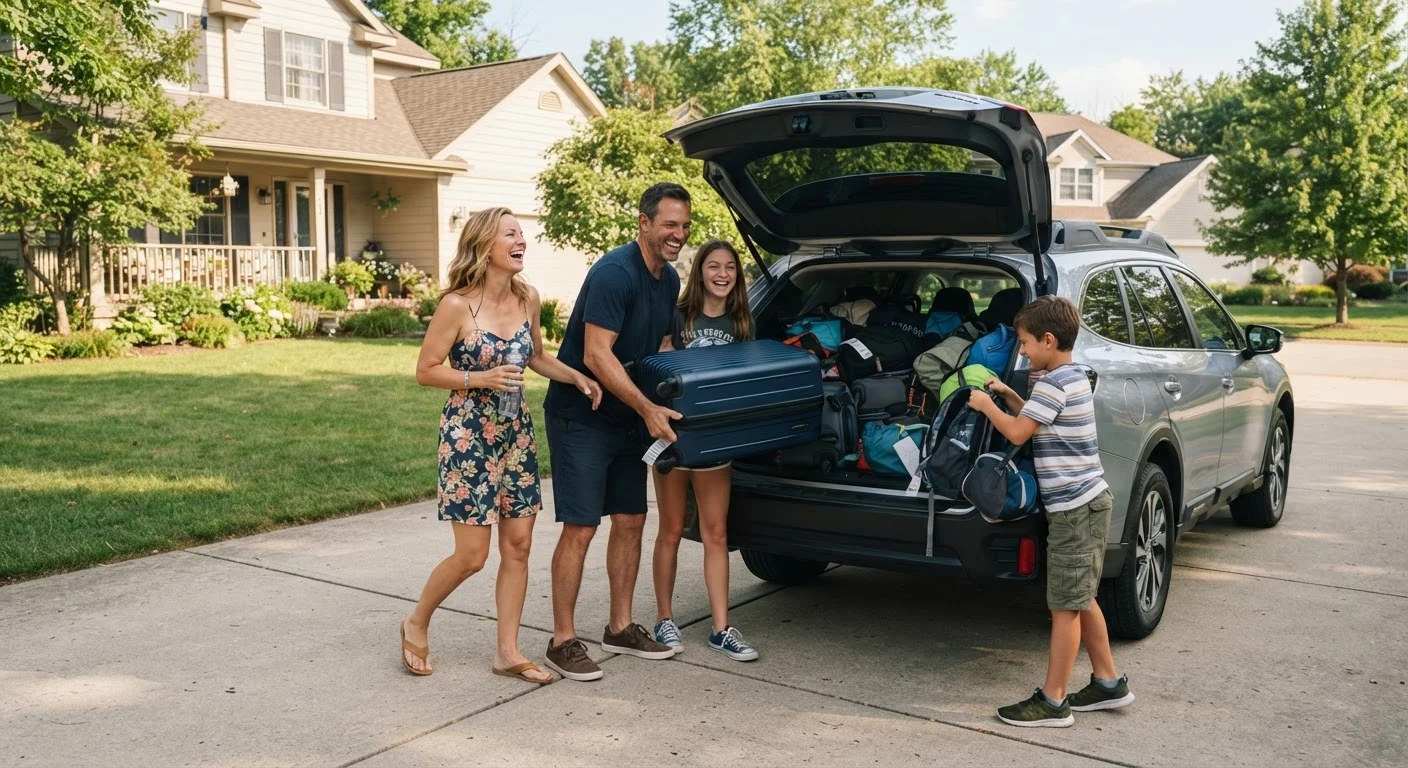
A step-by-step checklist covering destination research, budgeting, packing, and logistics so nothing gets missed before you leave.
Key Takeaways
Setting a firm budget before searching destinations prevents overspending before the trip even starts.
Traveling during shoulder season can cut accommodation costs by 20 to 40 percent compared to peak weeks.
Passport expiration dates, travel documents, and health requirements should be checked at least 90 days out.
Hidden costs like resort fees, parking, and checked baggage often break family vacation budgets.
Packing a medical kit and verifying insurance coverage can prevent large out-of-pocket expenses on the road.
Why a checklist beats winging it
Family trips go over budget or fall apart at the seams for predictable reasons: a passport expires two weeks before departure, a resort fee adds $30 per night nobody accounted for, or a child's car seat gets left behind. None of those problems are hard to prevent. They just require checking the right things in the right order before you hand over a credit card.
This checklist works through the planning process in roughly the sequence you should follow: budget first, then destination, then logistics, then packing. If your family already has a destination in mind, you can jump to the relevant section, but still run through the budget group first. For a fuller picture of where vacation money tends to disappear, see where family vacation budgets quietly break down.
Tools you will need
Before working through the checklist, gather the following. Having them in front of you prevents stopping and restarting.
Required
Current passports and government IDs
Needed to verify expiration dates and REAL ID compliance before booking flights or international travel.
Required
Household budget or spending records
Used to set a realistic trip ceiling based on what your family can actually set aside without disrupting monthly expenses.
Required
School and work calendars
Required to identify travel windows and compare shoulder season dates against available time off.
Required
Health insurance card and policy summary
Needed to confirm out-of-network and out-of-state or international coverage before finalizing your destination.
Optional
Spreadsheet or budgeting app
Used to track each cost category as you research so totals stay visible and comparable across destination options.
Required
CDC travel health pages (wwwnc.cdc.gov/travel)
Used to check any vaccination recommendations or health notices for your intended destination.
The full planning checklist
Work through each group in order. Mark items complete as you go, and flag anything that needs a follow-up action rather than leaving it blank.
Budget and finances
Set a total trip ceiling before researching destinations, including transportation, lodging, food, activities, and a 10 percent buffer for unexpected costs.Must
List every cost category: flights or gas, lodging, meals, activities, parking, baggage fees, resort fees, tips, and souvenirs.Must
Check whether your destination charges resort or amenity fees, which frequently appear only at check-in and can add $20 to $50 per night.Must
Compare the total cost of flying versus driving, factoring in gas, tolls, meals on the road, and the time difference.Should
Set up a separate savings account or envelope specifically for trip spending so the budget stays visible throughout planning.Nice to have
Destination and timing
Identify two or three candidate destinations and compare total costs for each, including typical lodging rates during your intended travel window.Must
Check school calendars and local holiday dates to find shoulder season windows where prices drop without major weather tradeoffs.Must
Research free or low-cost activity options at each destination, such as national parks, state beaches, municipal museums, and library card reciprocal programs.Should
Verify whether any government travel advisories apply to your destination, particularly for international travel, through official sources such as travel.state.gov.Must
Check typical weather for your exact travel dates, not just the season, since regional weather patterns can vary significantly week to week.Should
Documents and identity
Confirm that every family member's passport has at least six months of validity beyond the return date, since many countries require this margin.Must
Gather birth certificates and any custody documentation if a child is traveling with only one parent, as border agents may request these.Must
For domestic travel, verify that any adult using a driver's license for a flight holds a REAL ID-compliant license, which has been required for TSA checkpoints since May 2025.Must
Make digital and physical copies of all travel documents and store them separately from the originals.Should
Health and insurance
Contact your health insurance provider to confirm out-of-network or international coverage before finalizing your destination.Must
Check whether any vaccinations or health documentation are required or recommended for your destination, using official sources such as the CDC travel health pages.Must
Pack a basic medical kit with bandages, an antihistamine, pain reliever, any prescription medications in original labeled containers, and a written list of dosages for each family member.Should
Evaluate whether travel insurance makes financial sense for your trip size, particularly if you are booking non-refundable flights or lodging well in advance.Should
Booking and reservations
Book flights and lodging on weekdays rather than weekends, when demand on booking platforms tends to be lower.Should
Read cancellation and refund policies carefully before confirming any booking, and note deadlines in your calendar.Must
Reserve any activities or attractions that require timed-entry tickets well in advance, since popular national parks and museums often sell out weeks ahead.Must
Confirm whether lodging is genuinely kid-friendly by checking the property's age restrictions, crib availability, and pool safety setup.Should
Packing and logistics
Create a packing list at least two weeks before departure so you have time to locate or borrow items rather than buying them last-minute.Must
Weigh luggage before leaving to avoid checked-baggage overage fees, which typically run $30 to $100 per bag per direction.Should
Pack a carry-on with one change of clothes per person, medications, chargers, and any items you cannot afford to lose to a delayed checked bag.Must
Arrange for mail hold, pet care, and a trusted contact to check on your home while you are away.Should
Charge all devices the night before and carry a portable battery pack for day use, particularly if you are relying on mobile boarding passes.Nice to have
Passport timelines are longer than most families expect
Standard U.S. passport processing currently takes 6 to 8 weeks; expedited service takes 2 to 3 weeks. If any family member needs a new or renewed passport, apply at least 3 months before your departure date to avoid expensive last-minute expediting services or appointment fees. Check current processing times at travel.state.gov before assuming a timeline.
Resort fees are rarely included in the listed price
Many hotels, particularly in Las Vegas, Orlando, and coastal resort areas, charge daily fees of $20 to $50 on top of the advertised room rate. These fees typically cover amenities like Wi-Fi and pool access regardless of whether you use them. Always search for the total price including taxes and fees rather than the nightly rate alone before comparing properties.
Travel insurance exclusions matter more than the premium
Not all travel insurance policies cover pre-existing medical conditions, extreme weather cancellations, or certain adventure activities. Read the exclusions section of any policy before purchasing. For general guidance on evaluating coverage options, consult a licensed insurance professional familiar with travel policies.
A note on budget and timing
The single decision with the most effect on total trip cost is when you travel, not where. Flying on a Tuesday or Wednesday instead of a Friday typically costs 10 to 25 percent less per ticket on domestic routes. Traveling the week before or after a school holiday rather than during it can drop hotel rates by a third. If your children's school allows a few absences, that flexibility is worth real money.
Shoulder season windows vary by destination. For beach destinations in the Southeast, late April through early June and September through October offer lower rates with reasonable weather. For national parks in the West, late May and mid-September hit the sweet spot between crowds and weather. For more structured guidance on building the financial side of your trip, the monthly family budget walkthrough lays out a method for carving out a dedicated travel fund without disrupting other spending categories.
If you want to go deeper on cost-reduction across accommodation, food, and activities, approaches that hold up over time covers strategies that apply across most trip types. For families starting from scratch, planning a family vacation on a tight budget walks through destination selection and first-pass budgeting step by step.
Cheap Travel Ideas Editorial Team is the collective byline for our editorial team and contributor network. Articles published under this byline or an editorial pen name are researched, written, and reviewed according to our editorial standards for clarity, consistency, and independence before publication.
The content provided on our blog site traverses numerous categories, offering readers valuable and practical information. Readers can use the editorial team’s research and data to gain more insights into their topics of interest. However, they are requested not to treat the articles as conclusive. The website team cannot be held responsible for differences in data or inaccuracies found across other platforms. Please also note that the site might also miss out on various schemes and offers available that the readers may find more beneficial than the ones we cover.